
The Basic Difference (In Words That Make Sense)
Let me explain the real difference between an echocardiogram vs EKG, when you’d need each one, and what actually happens during these tests. No jargon or textbook definitions—just the straight talk.
Below is the quick definition of the two tests.
An EKG (electrocardiogram) checks your heart’s electrical system—the signals that make it beat. Think of it as examining the wiring in your house.
An echocardiogram is like watching a live video of your heart pumping. It uses sound waves to show how your heart’s built and whether it’s working right. This is watching the actual engine run, not just checking if the spark plugs fire.
Both matter, but they’re showing your doctor wildly different stuff about what’s happening in your chest.
What an EKG Actually Does
An EKG tracks your heart’s rhythm and electrical activity. Every single beat starts with an electrical signal traveling through your heart. The EKG catches these signals and either prints them as waves on paper or displays them on a screen.
What doctors look for on an EKG:
- Irregular rhythms (your heart beating too fast, too slow)
- Signs you’re having a heart attack at that moment
- Evidence you had a heart attack earlier
- Whether parts of your heart aren’t getting enough oxygen
- If your heart’s bigger than it should be
- How medications are affecting your heart
The actual test is stupid quick—maybe 5 to 10 minutes if the tech’s moving slow. You lie flat, they stick about 10 small patches with wires on your chest, arms, and legs, and boom. The machine reads what’s already happening. Zero pain involved.
I’ve had so many patients worry they’re gonna get zapped or feel electricity running through them. Nope. The machine just listens to what your heart’s already doing. You won’t feel anything except maybe the sticky patches coming off afterward.
What an Echocardiogram Actually Does
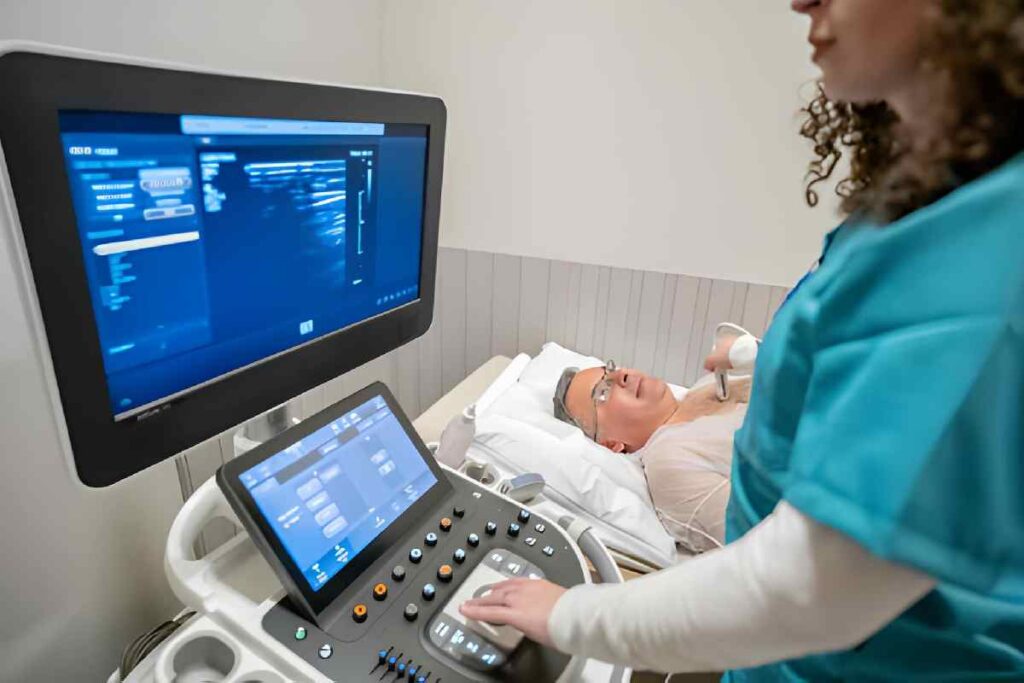
An echocardiogram (most people just call it an “echo”) works exactly like the ultrasound pregnant women get. A tech moves this wand thing around your chest, and it bounces sound waves off your heart to create moving pictures in real-time.
What an echo reveals:
- How hard your heart’s pumping (they measure something called ejection fraction)
- Whether your heart chambers are the right size or stretched out
- If your valves are opening and closing like they should
- How blood flows through different parts of your heart
- Whether there’s fluid collecting around your heart
- Blood clots hiding inside your heart (scary but good to find)
- Problems you were born with that might’ve gone unnoticed
An echo takes longer time—usually 30 minutes to an hour. You lie on your left side, they squirt cold gel on your chest, and they press the wand around to capture different angles. Sometimes they’ll tell you to hold your breath for a few seconds or roll slightly.
Doesn’t hurt either, though if the tech really has to press down to get through your ribs, that can feel a bit uncomfortable. Nothing terrible though.
When Would You Need an EKG vs Echocardiogram?
Your doctor’s not just picking these randomly. There’s logic behind which test they order.
You’d probably get an EKG if:
- You’re having chest pain or it feels tight
- Your heart feels like it’s racing or doing flip-flops
- You’re getting dizzy or passing out
- You can’t catch your breath
- You’re over 40 with high blood pressure or diabetes and haven’t had one recently
- You’re about to have surgery and they need to clear your heart first
- You just started a new medication that could mess with your heart rhythm
You’d probably get an echocardiogram if:
- Something funky showed up on your EKG
- Your doctor heard a whooshing sound (murmur) when listening to your heart
- You’re showing signs of heart failure—swollen ankles, can’t breathe lying flat, exhausted all the time
- You had a heart attack and they want to see what got damaged
- You’ve got valve issues they’re monitoring
- They think something’s structurally wrong with your heart
- You went through chemo (certain cancer drugs can wreck your heart muscle)
Plenty of times you’ll end up getting both. Maybe your EKG shows a funky rhythm, but the echo explains why—could be a leaky valve or your heart muscle’s too weak to squeeze properly.
The Types of Each Test (Yeah, There’s More Than One)
Different kinds of EKGs:
Standard resting EKG – What I already described. You’re chilling on a table.
Stress EKG – You hop on a treadmill or bike hooked up to the EKG to see how your heart handles working harder.
Holter monitor – Basically a portable EKG you wear home for a day or two to catch weird rhythms that come and go.
Event monitor – Like a Holter but you wear it way longer (sometimes months) and only turn it on when something feels off.
Different kinds of echos:
Transthoracic echo (TTE) – The regular one where the wand’s on your chest.
Transesophageal echo (TEE) – They put you under and slide a scope with an ultrasound down your throat. Sounds awful but you’re asleep, and it gets crazy clear pictures since there’s no ribs blocking the view.
Stress echo – They do an echo, make you exercise, then do another echo right after to compare how your heart performs when it’s working hard.
3D echo – Creates images in three dimensions instead of flat. Really helpful for complicated valve stuff.
Cost and Insurance Reality Check
Let’s talk money because this actually matters to real people.
An EKG won’t break the bank—usually $50 to $200 if you’re paying out of pocket. Most insurance covers it completely when there’s a legit medical reason.
An echocardiogram’s pricier—you’re looking at $1,000 to $2,000 without insurance. With insurance, you might owe a copay or whatever percentage your plan makes you cover. Insurance typically pays if there’s a medical need, but they might fight you on screening echos when nothing’s obviously wrong.
Here’s something that’ll save you a headache: call your doctor’s office before scheduling and have them verify your insurance will cover it. Prior authorization fights are the absolute worst.
Which Test Is More Accurate?
This question doesn’t really makes sense because they’re measuring two different things. It’s like asking whether a ruler or a scale is more accurate—they measure different stuff altogether.
An EKG absolutely nails what it’s designed to do—catching electrical weirdness. But it can’t see if your valves are jacked up or your heart’s enlarged.
An echocardiogram is the best way to actually look at your heart’s structure and see how well it pumps. But it’ll miss certain electrical problems that only show up on an EKG.
The complete picture usually comes from running both when your situation calls for it.
What About Preparation?
For an EKG: Nothing. Just show up. Maybe wear a shirt that buttons instead of something you have to pull over your head—makes it easier when they need to stick stuff on your chest.
For an echocardiogram: Usually nothing either. If you’re getting a TEE (the one where they put the scope down your throat), you can’t eat beforehand because of the sedation. Your doctor will give you heads up if you need to do anything special.
For both, tell them every medication you take. Some meds change how your heart beats or functions, and your doctor needs to know that when they’re reading your results.
The Bottom Line on Echocardiogram vs EKG
Here’s what you need to remember:
EKG = checks the electrical signals and rhythm Echocardiogram = shows structure and how well it pumps
Both methods are non-invasive and are totally safe and incredibly helpful. They just do different jobs. Your doctor picks what they need based on your symptoms and what they’re trying to figure out.
If your doctor wants you to get either test, don’t freak out. These are standard diagnostic tools doctors use constantly. They help catch problems early or cross serious issues off the list of possibilities.
And if you’re sitting there confused about why you need one test and not the other? Ask. Seriously. Any good doctor will explain why they ordered what they ordered. It’s your body—ad you deserve to understand what’s happening.
At the end of the day, knowing the difference between an echocardiogram vs EKG will help you to take better care of yourself and bring awareness in you so that you can ask smarter questions to doctor.