
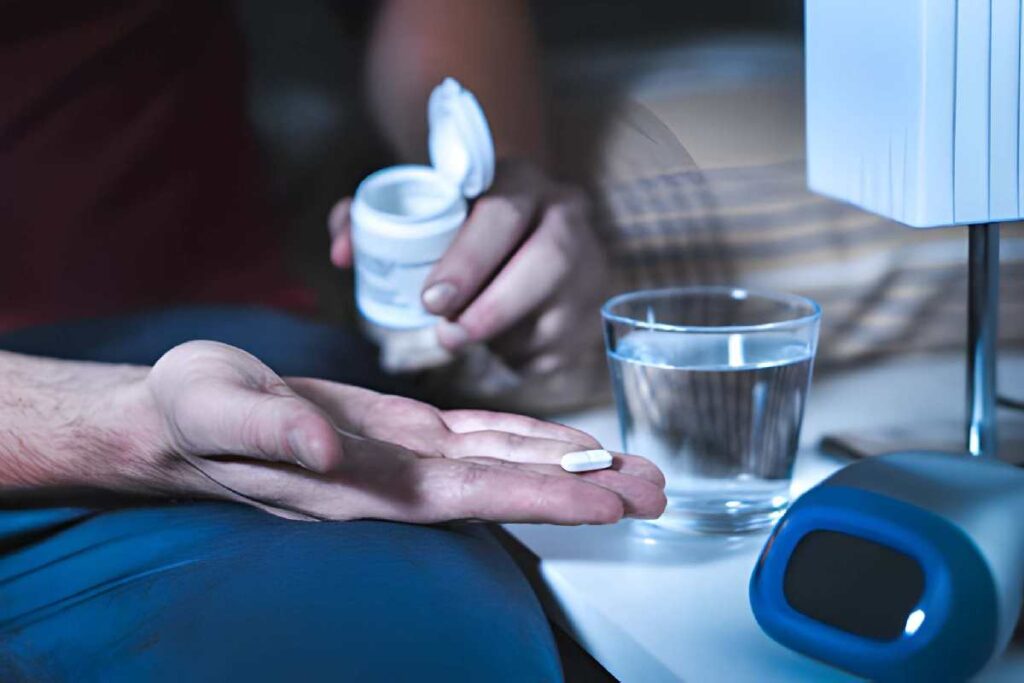
Why take famotidine at night kept coming up every time I talked to my doctor about my acid reflux. I kept asking “does it really matter?” and honestly thought it was just one of those doctor preferences that didn’t mean much.
Turns out I was completely wrong. Let me walk you through what I figured out after months of trial and error with this stuff.
Your Stomach Has a Night Shift Problem
Okay, this blew my mind when I first learned it. Your stomach basically goes into overdrive producing acid while you’re asleep. Like, it literally makes MORE acid at night than during the day.
And here’s the kicker – when you’re lying flat, that acid just sloshes around way easier. There’s no gravity helping keep things where they belong. That’s why I used to wake up at like 3 AM with that horrible burning feeling, or worse, choking on acid that came up while I was sleeping.
Famotidine blocks these receptors in your stomach that signal it to make acid. Pop it before bed, and you’re basically telling your stomach “hey, maybe chill out tonight?” right when it wants to go crazy with acid production.
Getting the Timing Right Makes All the Difference
I used to just take mine whenever I remembered. Sometimes morning, sometimes afternoon, completely random. My symptoms were all over the place.
Then my doctor explained that famotidine takes like 1-3 hours to really kick in. So if you take it around dinner or maybe an hour before you crash, it’s working hardest right when your stomach wants to produce the most acid.
What changed for me when I got serious about timing:
- Actually sleeping through the night without waking up in pain
- My throat stopped feeling raw every morning
- No more racing to the bathroom at 2 AM to chug water
- Way less of that gross metallic taste when I woke up
I Tried Morning Doses For Two Weeks – Total Disaster
Real talk – I switched to morning doses because I kept forgetting to take it at night. Thought maybe it wouldn’t matter that much since it’s supposed to last most of the day anyway.
Wrong. So wrong.
My daytime stuff was manageable, but nighttime? Absolute nightmare. I’m talking waking up gasping because acid came up into my throat, that disgusting taste that wouldn’t go away no matter how much I brushed my teeth, and feeling exhausted all day because my sleep was wrecked.
Switched back to nighttime and within like 3-4 days everything calmed down again. Lesson learned.
What’s Actually Happening Inside You at Night
Your body has this whole circadian rhythm thing going on with stomach acid – same way you have sleep cycles and all that. Between like 10 PM and 2 AM, your stomach just decides it’s time to make a bunch of acid. It’s controlled by this nerve called the vagus nerve that gets super active when you’re resting.
Mix that with lying horizontal, and your esophagus valve (the thing that’s supposed to keep acid down) is basically fighting a losing battle against physics.
What Happens If You Skip Nighttime Protection
I’ve got friends who tried going off their nighttime meds thinking they were fine. Here’s what usually happens:
- Waking up coughing from acid irritating your airways
- That raspy morning voice that won’t go away
- Your teeth can actually get damaged from repeated acid exposure (my dentist told me this)
- Constant throat clearing that drives everyone around you nuts
- Over time, your esophagus can get really irritated and cause bigger problems
Nobody wants to deal with that stuff long-term.
When Should You Actually Take It?
I’ve settled on about 45 minutes before I plan to get in bed. That gives it enough time to start working before I’m horizontal.
Some nights I eat dinner late (probably more than I should), and on those nights I just take it right after I finish eating. Doesn’t need an empty stomach or anything, so that works fine.
What’s worked for me:
- Same time every evening – I set a phone alarm because otherwise I’ll forget
- Don’t wait until you feel symptoms – that’s too late
- If your doctor has you on two doses a day, keep them about 12 hours apart
- Missing a dose here and there happens, just get back on track the next day
Not Everyone Needs the Nighttime Thing
Look, if your reflux hits during the day – maybe after lunch or when you’re stressed at work – then taking it at night might not be your best move. Some people take famotidine specifically before meals that trigger them, or during their workday when symptoms are worst.
Match your dose timing to when YOU actually feel bad. Most people with GERD or regular heartburn? That’s nighttime. But if you’re different, own that and adjust accordingly.
Special Cases That Change Everything
A few situations where the “take it at night” rule gets thrown out:
Work night shifts? Take it before whatever your sleep time is. The goal is protection while you’re sleeping, doesn’t matter what time that is.
Stress triggers your symptoms? Maybe you need it before stressful meetings or situations instead of bedtime.
Certain meals wreck you? Time it 30 minutes before that meal, even if it’s lunch.
Mixing It With Other Stuff Gets Complicated
This caught me off guard. Famotidine can mess with other medications, and when you take everything matters.
I used to pop Tums whenever I wanted and take my famotidine whenever. Turns out antacids can actually block famotidine from working right if you take them too close together. Now I space them out by at least an hour.
Some antibiotics and other meds need spacing too. I just run everything by my pharmacist now – they’re way more helpful with this stuff than I expected.
Lifestyle Stuff That Makes the Medication Work Better
Taking famotidine at night won’t save you if you’re doing everything else wrong. I learned this after wondering why I still had breakthrough symptoms even with perfect timing.
Changes that actually helped:
- Put some blocks under the bed frame to elevate where my head is (like 6 inches or so)
- Stopped eating after 7 PM most nights – this one sucked at first
- Cut way back on spicy food and tomato sauce at dinner
- Sleep on my left side now instead of my right
- Wear loose shirts to bed instead of tight stuff
These things made the medication work way better. Without them, I was still getting symptoms even though I was taking everything right.
How Long Does It Keep Working?
Famotidine lasts maybe 10-12 hours. Take it at night, you’re covered through sleep and usually into the next afternoon.
It’s not like those PPI medications that last a full day or more. That shorter timeframe is exactly why timing matters so much – you want those protective hours to overlap with when you actually need protection.
How to Know If It’s Working
After about a week of taking it consistently at night, you should see some real changes:
- Actually staying asleep all night
- Your throat feels normal in the morning
- Not reaching for antacids nearly as much
- Just sleeping better overall
- Way less coughing and throat clearing
If two weeks go by and you’re not noticing these things, call your doctor. Might need something stronger or a higher dose.
Mistakes I Made So You Don’t Have To
I’ve literally done all of these wrong at some point:
Taking it and immediately going to bed: Give it like 30-60 minutes to start working first.
Random timing every night: Your body likes consistency. All over the place timing = all over the place results.
Thinking it works like Tums: It’s preventive medicine, not a rescue treatment for active heartburn.
Eating a huge meal right after: Even good acid suppression can’t handle a massive food bomb.
Double dosing when I forgot one: Just take the next scheduled dose. Don’t try to catch up.
When Nighttime Famotidine Isn’t Enough
Sometimes it just doesn’t cut it, and there’s no shame in that. I eventually had to admit to my doctor that I was still struggling even with perfect timing and all the lifestyle changes.
You might need a PPI added on, a higher famotidine dose, or maybe there’s something else going on like a hernia that needs checking out.
Seriously though – if you can’t swallow right, you’re losing weight without trying, throwing up blood, or your poop is black, get to a doctor immediately. Don’t mess around with that stuff.
What It All Comes Down To
After everything I’ve been through with this, why take famotidine at night has a pretty straightforward answer. Your stomach makes more acid when you’re sleeping, lying down makes reflux way easier, and famotidine needs to be working when your body is doing its acid production thing.
For most people with regular nighttime heartburn or GERD, taking it 30-60 minutes before bed just makes sense. It’s about matching up with what your body’s already doing instead of fighting against it.
The real secret is sticking with it every day and doing the lifestyle stuff that helps too. And if nighttime dosing isn’t cutting it for you after really giving it a shot, don’t just suffer – tell your doctor and figure out a better plan.
Getting this dialed in changed everything for me. Actually sleeping through the night and waking up without that acid taste? Completely worth the effort of figuring out the right timing for famotidine at night