
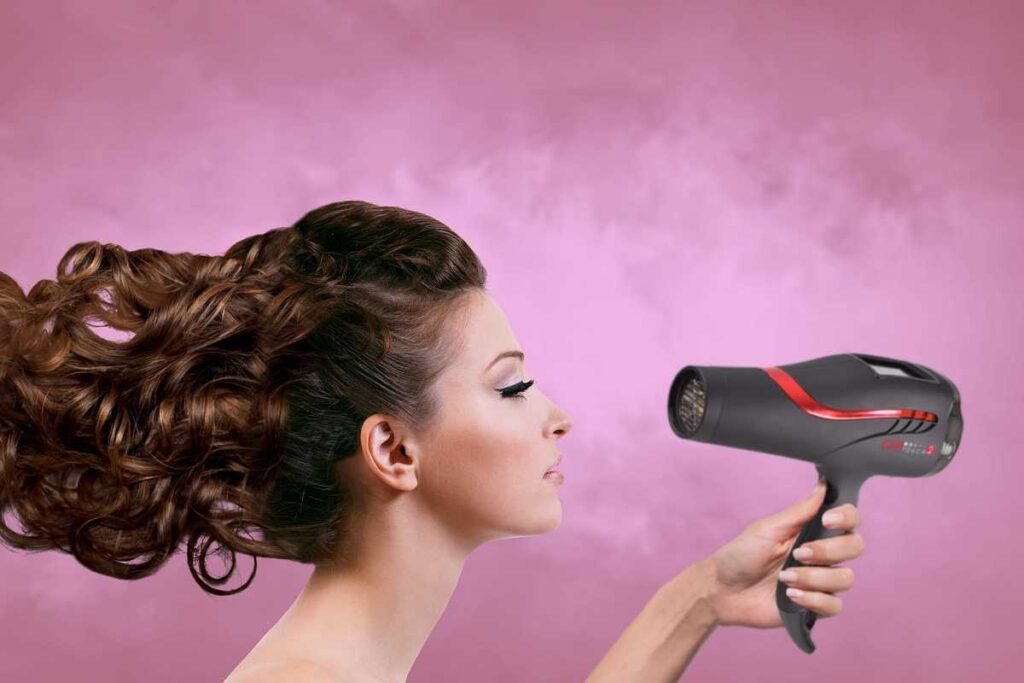
What’s Really Going Down When You Blow-Dry
Wet hair is weirdly fragile. Like, way more than you’d think. When your hair gets soaked, there’s this outer layer called the cuticle that basically puffs up and opens. Picture roof shingles lifting up in a storm—that’s kinda what’s happening on a microscopic level. Now if you take heat and just blast those open cuticles without any strategy, you’re cooking them. Result? Frizz city, breakage, and that crunchy texture that makes your hair feel like you could use it as a Brillo pad.
But plot twist—heat styling isn’t actually evil. I know we’ve been told for years that any heat equals instant hair death, but that’s not quite accurate. It’s the how that matters.
When this clicked for me, everything shifted. My hair went from looking perpetually pissed off at me to actually having some bounce and movement. And I didn’t even shell out hundreds for some fancy professional thing at first. Started with just changing my approach.
Cutting Through the Marketing BS: What Features Really Count
Walk into Target or browse Amazon and you’ll see approximately seven million hair dryers all screaming about their special technology. Ionic this, tourmaline that, ceramic coating, seventeen attachments you’ll definitely never touch. It’s a lot.
Let me save you some headache and break down what genuinely matters versus what’s just fancy words on a box:
Temperature control is absolutely crucial. If your dryer has exactly one setting and that setting is “recreate the surface of Mercury,” you’re gonna have issues. You need options. Multiple heat levels, multiple speed levels, and ideally one of those cool shot buttons. That blast of cold air at the end? That’s what seals everything up and gives you actual shine instead of frizz.
Wattage basically tells you how strong the motor is. Most decent ones land somewhere between 1800 and 2000 watts. Higher numbers mean more power, which counterintuitively means less damage overall because you’re done faster. Less time exposed to heat equals healthier hair. Makes sense when you think about it.
Ionic technology sounds like something out of a sci-fi movie, but it’s legit. These dryers shoot out negative ions that literally break water molecules down faster. Translation: your hair dries quicker and gets less frizzy. I rolled my eyes at this feature for years thinking it was complete marketing garbage. Tried one. Ate my words. The difference is real.
Weight is something nobody talks about until they’ve been holding a dryer above their head for fifteen minutes and their arm feels like it’s gonna fall off. Anything north of 1.5 pounds starts getting heavy real quick, especially if you’ve got a lot of hair to work through.
Now here’s what doesn’t matter nearly as much as companies desperately want you to believe: whether it comes in rose gold, if some celebrity slapped their name on it, or if it has 47 different attachments that’ll sit in your bathroom drawer untouched for eternity. Stick to the basics.
How I Went From Hair Destroyer to Actually Kinda Knowing What I’m Doing
My old morning routine was honestly a masterclass in doing everything wrong. I’d get out of the shower, aggressively rub my hair with a towel like I was trying to start a fire (terrible idea), crank my dryer to the hottest setting possible (also terrible), hold it basically touching my scalp (yeah, terrible), and then genuinely wonder why I looked like I’d been electrocuted by lunchtime.
Here’s what I do now that’s made an actual difference:
First off, prep work matters. After I wash my hair, I squeeze—not rub, not twist, just gently squeeze—the excess water out using either a microfiber towel or honestly just an old t-shirt. Works better than regular towels because the fabric doesn’t rough up your cuticle. Then heat protectant spray goes on. No exceptions, no skipping it because I’m running late, no “just this once.” Every time.
Section things out. I clip my hair into four to six chunks depending on how thick it’s being that day. This way I can actually focus the air where I need it instead of just waving the dryer around randomly hoping for the best.
Distance is your friend. Keep that nozzle at least six inches away from your actual hair. I know it’s tempting to get all up in there for faster results, but that’s exactly how you end up with crispy, damaged hair.
Keep moving. Never just park the dryer on one spot. I’m constantly moving it around so no single section is getting blasted for more than a few seconds at a time.
Cool it down at the end. Once I’m maybe 80% dry, I flip to the cool setting and give everything a good 30-second blast. Seals the whole situation down and makes everything shiny.
The whole thing takes about ten minutes now. Used to spend twenty minutes fighting with my hair and getting worse results. Go figure.
Do You Actually Need to Upgrade Your Current Dryer?
Not everyone needs a Dyson that costs more than their car payment. Someone had to say it.
If you’re washing and blow-drying daily, if you’ve got super thick or coarse hair that takes forever to dry, or if you’re constantly styling for events and stuff, then yeah, investing in something higher-end makes sense. Better motors actually last, the heat spreads more evenly, and all that advanced tech does perform noticeably better.
But if you’re mostly air-drying and only pulling out the dryer once or twice weekly? A solid middle-of-the-road option works just fine. You don’t need to spend a fortune.
Red flags that you need a new dryer:
- Takes an unreasonably long time to dry your hair now (motor’s dying)
- Heat is all over the place or gets scary hot
- Making weird sounds or smells kinda burny
- The cord looks sketchy or damaged anywhere
- It’s older than your last three phones combined
I rocked the same $40 dryer for three solid years and it worked great because I actually used it correctly. Eventually upgraded because I started heat styling more and yeah, the nicer one is better. But honest truth? The technique I learned mattered way more than the equipment upgrade.
Attachments: Necessary or Just Clutter?
Most dryers ship with at least two things: a concentrator nozzle and a diffuser. Let me explain when you’d actually use these instead of letting them collect dust.
The concentrator is that skinny attachment that focuses the airflow into a narrow stream. I use this when I want straight, sleek hair. It lets you direct air exactly where you want it while you’re working with a brush, smoothing everything down nice and flat. If smooth and straight is your goal, this thing helps a lot.
The diffuser looks kinda bizarre—like a bowl with a bunch of plastic fingers poking out. It’s specifically designed for curly or wavy hair because it spreads the airflow out so you’re not blasting your curls into oblivion. My roommate has gorgeous curly hair and legitimately uses this every time. Says it makes her curls pop without turning into a frizz nightmare.
Straight hair and you never touch a round brush? Probably don’t need the concentrator much. Hair is completely straight naturally? The diffuser won’t do much for you. But hey, if they come with the dryer anyway, might as well keep them around.
Mistakes I See Literally Everyone Making
Even when you’ve got a solid dryer and decent technique, people still mess up in these specific ways:
Starting with dripping wet hair. Your dryer shouldn’t be doing literally all the heavy lifting here. Get your hair to damp first—like 60-70% dry just from toweling and air. Way less heat exposure that way.
Not using heat protectant. Yeah, it’s one more product. One more step in the morning. But it’s literally the only thing standing between your hair and direct heat damage. Just spray it on.
Defaulting to maximum heat every single time. Most of us genuinely don’t need the highest setting. Medium heat works perfectly fine for regular hair and causes way less damage. Save the nuclear option for super thick, coarse hair that actually needs it.
Blowing air up the hair shaft. This opens the cuticle up and creates instant frizz. Always aim downward, from your roots toward the ends, following how your hair naturally grows.
Never cleaning the filter. That little vent situation on the back gets absolutely clogged with dust and loose hair. Clean it once a month or your motor burns out way faster than it should.
Professional Models vs. Drugstore Stuff: Real Talk
Here’s my completely honest opinion after trying both ends of the spectrum: professional models from brands like Dyson, T3, Harry Josh—they’re legitimately better built. The technology is more sophisticated, they’re constructed better, and they last longer before crapping out on you.
However—and this is important—they’re not magical. A $400 dryer won’t repair damage that’s already baked into your hair, and it definitely won’t make up for using terrible technique. I’ve personally seen people with cheap dryers who have amazing hair, and people with expensive dryers whose hair looks absolutely wrecked.
Sweet spot for most regular people is probably somewhere between $50 and $150. You get quality build, actual heat options, ionic technology that works, and decent attachments without needing to take out a small loan.
Right now I use a ceramic ionic dryer that ran me about $80 and I’m genuinely happy with it. Dries my hair in under ten minutes, doesn’t turn me into a frizz ball, and it’s held up great for over a year with regular use.
What Actually Matters When Choosing
Picking a hair dryer doesn’t need to be this complicated ordeal. Focus on these things:
- Multiple heat and speed settings so you’ve got control
- Decent wattage, like 1800 or above for most hair types
- Ionic or ceramic technology to cut down on frizz
- Weight that won’t kill your arm
- Cool shot button to seal things up
Everything beyond that is just bonus features.
And honestly? How you use the thing matters way more than which specific brand or model you buy. Good technique with a mediocre dryer beats awful technique with an expensive dryer every single time. Not even close.
Start with heat protectant, keep some distance, stay in motion, work in sections, finish with cool air. Do these things consistently and your hair’s gonna look better regardless of whether your dryer cost forty bucks or four hundred.
The hair dryer sitting in your bathroom right now might actually be totally fine—you might just need to change up your approach. Try that first before dropping serious cash on an upgrade. Your hair and your bank account will both thank you.

Mohammed Shareef — Founder & Editor of The Natural Beauty Life, blogger, and SEO-focused content creator. I create practical, research-driven content on beauty, skincare, haircare, wellness, and online safety to help readers make informed decisions.
Outside of work, I enjoy exploring natural remedies, testing beauty routines, researching health trends, and learning new digital strategies.
You can reach me at Contact@thenaturalbeautylife.com — always happy to connect!