
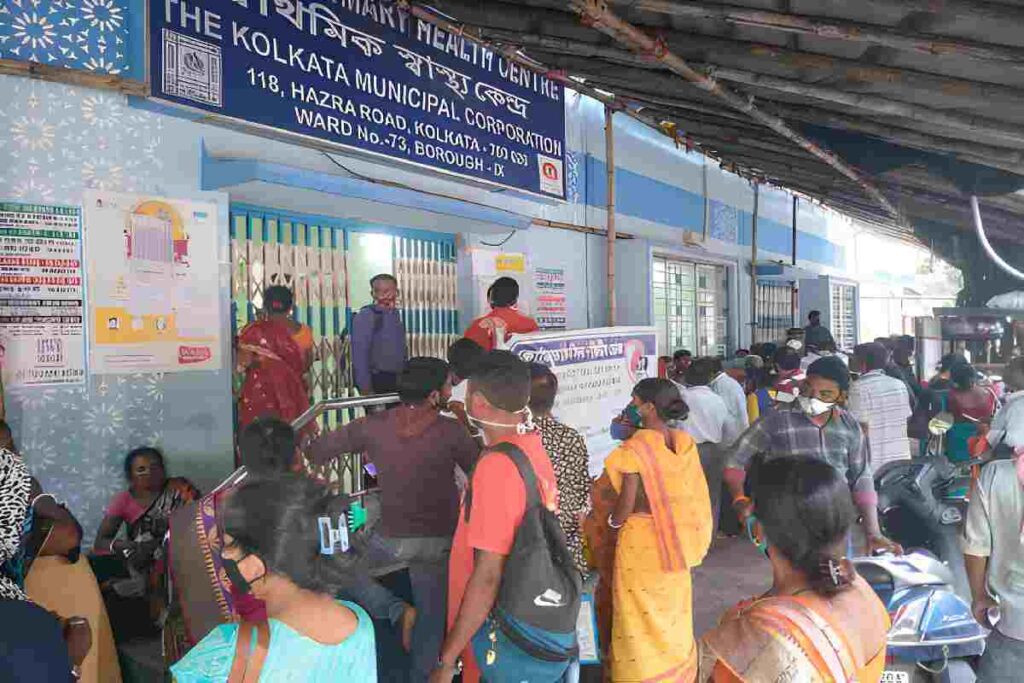
What Exactly Is This West Bengal Health Scheme?
The Swasthya Sathi scheme (that’s the official name of the West Bengal health scheme) is basically the state government’s way of making sure you don’t go broke when someone in your family gets sick.
Launched back in 2016, this thing covers pretty much every family in West Bengal. And I mean every family—whether you’re earning well or barely getting by.
Here’s what makes it different from other health insurance:
- Universal coverage – No income checks, no complicated eligibility criteria
- Cashless treatment – Walk into empaneled hospitals without worrying about upfront payments
- Family floater – Your entire family gets covered under one card
- ₹5 lakh coverage – That’s your annual limit for basic beneficiaries
Who Gets Covered Under the Swasthya Sathi Scheme?
This is where it gets interesting. The West Bengal health scheme doesn’t discriminate.
Priority beneficiaries (families below poverty line, certain occupational groups) get the full ₹5 lakh coverage automatically. But here’s the kicker—general beneficiaries can also register and get coverage.
Your coverage includes:
- Parents
- Spouse
- Dependent children
- Unmarried daughters (regardless of age)
One family card covers all of them. No individual limits, just one shared pool of ₹5 lakhs per year.
What Medical Expenses Does It Actually Cover?
I’m not going to bore you with bureaucratic language. Let me break down what this West Bengal health scheme pays for:
Hospitalization costs:
- Pre-hospitalization expenses (3 days before admission)
- Post-hospitalization care (15 days after discharge)
- ICU charges
- Doctor consultation fees
- Diagnostic tests
- Medicines during hospital stay
- Surgical procedures
Specific treatments include:
- Cardiac surgeries and angioplasty
- Cancer treatment including chemotherapy
- Kidney dialysis and transplants
- Joint replacement surgeries
- Maternity care and deliveries
- Pediatric surgeries
- Eye surgeries including cataract removal
The scheme covers over 1,400 medical procedures. That’s not a typo—fourteen hundred.
How Do You Actually Register?
Here’s where people get confused. Registration for the Swasthya Sathi health scheme is actually pretty straightforward if you know the steps.
For priority beneficiaries:
You probably already have your card. Check with your local health center or gram panchayat office.
For general beneficiaries:
- Visit the official Swasthya Sathi portal
- Click on “Citizen Registration”
- Fill in your Aadhaar details
- Add family member information
- Upload required documents (Aadhaar, ration card, voter ID)
- Submit and wait for verification
Within 15-20 days, your card gets generated. You can download the e-card immediately or collect the physical card from designated centers.
Documents you’ll need:
- Aadhaar cards of all family members
- Ration card
- Voter ID
- Bank account details
- Recent passport-size photos
Which Hospitals Accept This Card?
This matters more than anything else, right? What’s the point of coverage if no decent hospital accepts it?
The West Bengal health scheme has empaneled over 700 hospitals across the state—both government and private.
Major private hospitals on the list:
- AMRI Hospitals (multiple locations)
- Apollo Gleneagles Hospital
- Medica Superspecialty Hospital
- Rabindranath Tagore International Institute of Cardiac Sciences
- Fortis Hospital
Plus all government medical colleges and district hospitals are automatically covered.
Pro tip: Always verify if your preferred hospital is empaneled before admission. The Swasthya Sathi website has a searchable hospital list. I’ve seen people assume their hospital accepts it, only to find out later it doesn’t.
How Does Cashless Treatment Actually Work?
Let me walk you through this because it’s simpler than you think.
During planned admissions:
- Show your Swasthya Sathi card at the hospital desk
- Hospital verifies your eligibility online
- They check if your procedure is covered
- Generate pre-authorization
- You get admitted without paying anything upfront
During emergencies:
Show your card. That’s it. The hospital handles the rest.
The hospital directly bills the government for covered expenses. You don’t pay, you don’t file claims, you don’t chase reimbursements.
Important reality check: Some hospitals might ask for deposits for procedures near or exceeding your coverage limit. They’re not supposed to, but it happens. Know your rights.
What Doesn’t Get Covered?
Every scheme has exclusions. The West Bengal health scheme is no different.
Not covered:
- OPD consultations (you need to get admitted)
- Cosmetic surgeries (unless medically necessary)
- Dental treatments (except surgical procedures)
- Treatment outside empaneled hospitals
- Self-inflicted injuries
- Expenses beyond ₹5 lakh annual limit
Also, pre-existing conditions ARE covered—no waiting period. That’s actually huge compared to most private insurance.
Common Problems People Face (And Solutions)
I’ve talked to enough people to know where the system breaks down.
Problem 1: Card not generating after registration
Check your application status on the portal. If it’s stuck, contact the helpline (1800-313-444-444). Don’t just wait—these things don’t resolve themselves.
Problem 2: Hospital claiming your procedure isn’t covered
Get it in writing. Check the Swasthya Sathi procedure list yourself. Sometimes hospital staff just doesn’t know the full coverage. Escalate to the hospital’s insurance desk.
Problem 3: Hospital demanding upfront payment
This violates scheme guidelines. Contact the Swasthya Sathi grievance cell immediately. Document everything—names, amounts demanded, timestamps.
Problem 4: Lost or damaged card
Apply for reissue through the portal. You can use the e-card version on your phone in the meantime.
How Does This Compare to Ayushman Bharat?
Good question. Both schemes actually work together in West Bengal.
Ayushman Bharat covers up to ₹5 lakh for economically weaker families meeting specific criteria. Swasthya Sathi covers everyone in the state with the same ₹5 lakh limit.
If you’re eligible for Ayushman Bharat, you’re automatically covered under the West Bengal health scheme too. But Swasthya Sathi covers way more families because there’s no income restriction for registration.
Think of Swasthya Sathi as the broader safety net.
My Honest Take on This Scheme
Is the West Bengal health scheme perfect? No. I’ve heard stories of delayed approvals, hospitals being difficult, and coverage limits getting hit during serious illnesses.
But here’s what matters—it’s there. It’s functional. And it’s saved countless families from medical bankruptcy.
I’ve personally known people who got cardiac surgeries worth ₹3-4 lakhs completely free. Cancer patients getting chemotherapy without paying a rupee. That’s real impact.
My advice:
- Register even if you have private insurance (it’s additional coverage)
- Keep your card updated if family composition changes
- Know which hospitals near you are empaneled
- Read what’s covered and what isn’t
- Don’t wait for emergencies to figure this out
Quick Action Steps
If you’re in West Bengal and haven’t registered yet:
- Visit swasthyasathi.gov.in tonight
- Check if you’re already enrolled (many priority beneficiaries are)
- If not, start your registration
- Download the e-card once approved
- Save the helpline number in your phone
Literally takes 15 minutes and could save your family’s financial future.
The Bottom Line
The West Bengal health scheme isn’t just another government program gathering dust. It’s actively protecting millions of families from healthcare costs that could otherwise destroy them financially.
Is it promoted enough? Probably not. Do enough people know about it? Definitely not. That’s why I wanted to lay it all out here—no jargon, no bureaucratic nonsense, just what you actually need to know.
Healthcare emergencies don’t announce themselves. Get registered. Stay covered. And for the love of everything, tell your parents and relatives about this if they’re in Bengal.
The West Bengal health scheme exists to help you. Use it.