Learn what red light therapy is, how it works, who it helps, safety considerations, and realistic benefits—clear, factual, and hype-free. It’s commonly used for skin health, pain relief, muscle recovery, and inflammation—but it’s also widely misunderstood.
This guide explains what red light therapy actually is, how it works, who it’s for, who should be cautious, and how to use it realistically—without hype.
What Is Red Light Therapy? (Clear Definition)
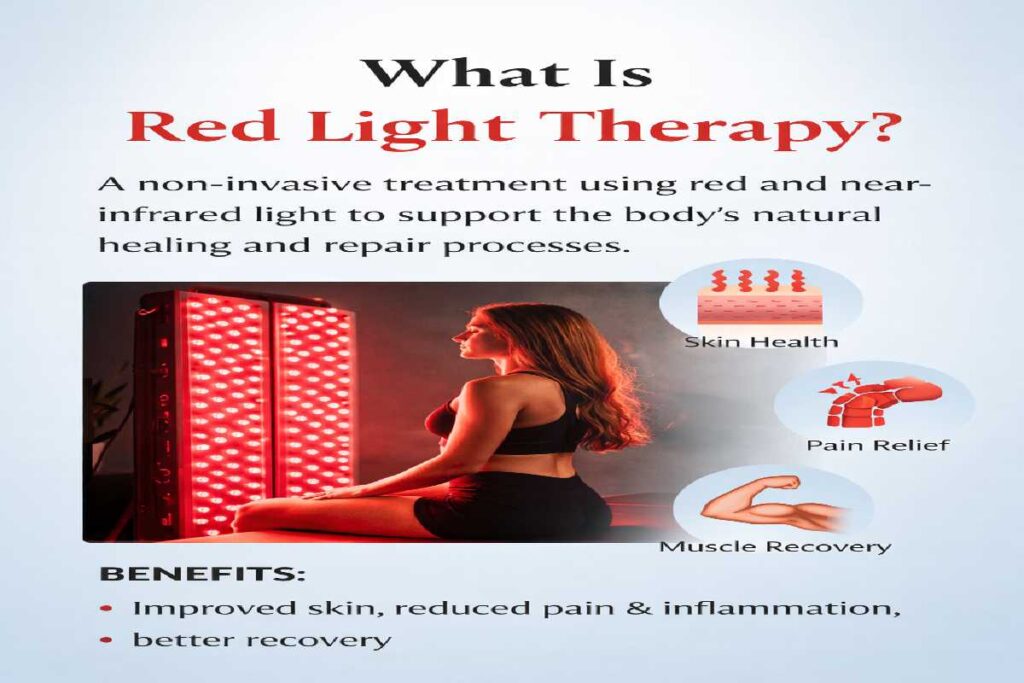
Red light therapy (RLT) is the controlled exposure of red and near-infrared light to the body to support cellular energy production, which can help with tissue repair, inflammation control, and overall function over time.
It does not use ultraviolet (UV) light.
It does not burn or damage skin.
And it does not force results—your body still does the work.
That’s why benefits are gradual and differ from person to person.
Why Red Light Therapy Is Everywhere—and Why It’s Confusing
Red light therapy has been used in medical and sports settings for years, but recent wellness trends pushed it into clinics, gyms, and homes. The rise in popularity came with mixed messaging.
Common sources of confusion include:
- Mixing red light with infrared heat or laser treatments
- Overstated claims like “instant results” or “detox”
- Little guidance on who actually benefits
Understanding the basics removes most of the noise.
Red Light vs Near-Infrared Light (Important Difference)
| Type of Light | Typical Wavelength | How Deep It Goes | Common Uses |
| Red light | ~630–660 nm | Skin and surface tissue | Skin tone, fine lines, acne support |
| Near-infrared (NIR) | ~810–880 nm | Deeper tissue | Muscles, joints, inflammation |
Many devices include both, because they target different layers of the body.
How Red Light Therapy Works (Plain-English Science)
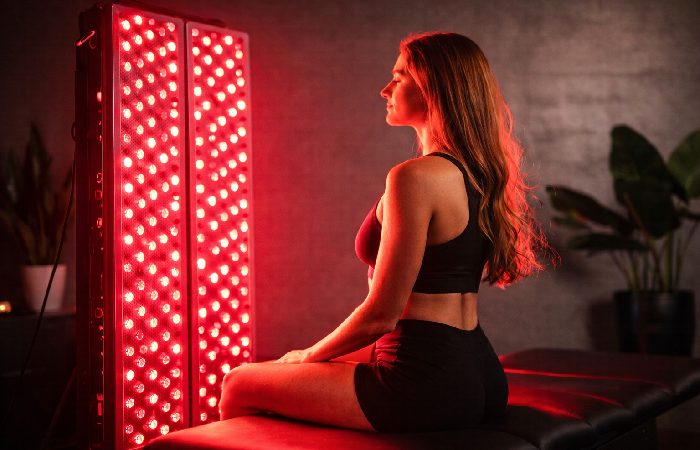
When red or near-infrared light reaches your skin, it’s absorbed by parts of your cells responsible for energy production—mainly the mitochondria.
What happens next:
- Light is absorbed by cellular enzymes
- Mitochondria produce energy (ATP) more efficiently
- Cells have more energy for repair and normal function
This can support:
- Faster tissue recovery
- Reduced inflammatory signaling
- Improved local circulation
Why Results Are Supportive, Not Instant
it doesn’t override biology. It supports it. That means:
- Results take time
- Consistency matters more than intensity
- Outcomes vary based on age, health, and lifestyle
What Red Light Therapy Is Commonly Used For
Skin Health and Appearance
- Supports collagen and elastin production
- Helps with fine lines and uneven tone
- Can calm redness and post-inflammatory irritation
Pain and Inflammation
- Often used for joint stiffness and mild arthritis symptoms
- May help muscle soreness and overuse injuries
- Commonly paired with physical therapy
Muscle Recovery
- May reduce delayed-onset muscle soreness (DOMS)
- Can support recovery between workouts
Hair Growth Support
- Some devices are cleared for certain types of hair loss
- Most helpful in early-stage thinning
Wound and Tissue Healing
- Used in clinical settings to support wound repair
- May improve scar appearance over time
Evidence note: Support is strongest for skin health, pain relief, and tissue repair. Other uses are still being actively researched.
Who Red Light Therapy Is Most Likely to Help
it may be a good fit if you:
- Want non-invasive skin improvement
- Have mild to moderate joint or muscle discomfort
- Exercise regularly and want better recovery
- Prefer drug-free wellness tools
- Are comfortable with gradual, consistent approaches
It works best alongside good sleep, nutrition, and movement.
Who Should Be Cautious or Avoid It
Speak with a healthcare professional before use if you:
- Have a photosensitive condition
- Take photosensitizing medications
- Have active or suspected cancer in the treatment area
- Have been advised to limit light exposure
Caution doesn’t always mean “no”—it means get guidance first.
What Red Light Therapy Does NOT Do (Myths vs Facts)
| Myth | Fact |
| “It’s a cure-all” | It supports healing but doesn’t cure disease |
| “More is better” | Overuse can reduce benefits |
| “It detoxes the body” | No credible evidence supports detox claims |
| “It replaces medical care” | It’s complementary, not a substitute |
Clear limits build trust—and better results.
Is Red Light Therapy Safe?
For most people, yes—when used correctly.
What’s known:
- Red and near-infrared light are non-ionizing (unlike UV)
- No evidence of DNA damage with proper use
- Side effects are uncommon and usually mild
Basic safety tips:
- Avoid staring directly into LEDs
- Use eye protection for facial treatments
- Follow recommended time and distance
- Don’t assume daily use is better
At-Home vs Professional Red Light Therapy
| Factor | At-Home Devices | Professional Sessions |
| Cost | One-time purchase | Pay per visit |
| Convenience | High | Appointment-based |
| Power | Moderate | Higher |
| Results | Gradual | Faster, not always necessary |
For many people, consistent home use is sufficient.
How to Use Red Light Therapy Effectively
General guidance (varies by device):
- Frequency: 3–5 sessions per week
- Session length: 10–20 minutes per area
- Distance: Follow manufacturer guidance
- Timeline: 8–12 weeks before judging results
Consistency beats intensity.
Common Mistakes That Limit Results
- Expecting overnight changes
- Using it every day “just in case”
- Sitting too far from the light source
- Ignoring sleep, stress, and nutrition
it works best as part of a bigger picture.
How Long Does It Take to See Results?
Typical patterns:
- 2–4 weeks: subtle changes
- 6–8 weeks: clearer improvements
- 12+ weeks: cumulative benefits
Many people stop just before results compound.
Is Red Light Therapy Worth Learning More About?
It’s worth exploring if you:
- Prefer low-risk, evidence-supported tools
- Are patient with gradual progress
- Want support, not shortcuts
It may not be a good fit if you expect instant or dramatic changes.
Conclusion
So, what is it in practical terms? It’s not a miracle treatment and it’s not just another wellness trend. It’s a science-supported, non-invasive method that helps the body do what it’s already designed to do—repair, recover, and function more efficiently—when used correctly and consistently.
For skin health, pain relief, muscle recovery, and general wellness support,it can be a useful tool. But results depend on realistic expectations, proper use, and patience. It works best as part of a broader lifestyle that includes good sleep, movement, and nutrition—not as a standalone fix.
FAQs
Does red light therapy really work?
Yes, for specific uses like skin health and pain relief when used consistently.
Can I use red light therapy every day?
Daily use is usually unnecessary; 3–5 sessions per week is typical.
Is red light therapy safe for the face?
Yes, with eye protection and proper distance.
Does red light therapy help with weight loss?
Evidence is limited and inconsistent; it shouldn’t be used for weight loss.
Is red light therapy the same as infrared therapy?
They overlap, but red and near-infrared target different tissue depths.

Mohammed Shareef — Founder & Editor of The Natural Beauty Life, blogger, and SEO-focused content creator. I create practical, research-driven content on beauty, skincare, haircare, wellness, and online safety to help readers make informed decisions.
Outside of work, I enjoy exploring natural remedies, testing beauty routines, researching health trends, and learning new digital strategies.
You can reach me at Contact@thenaturalbeautylife.com — always happy to connect!