
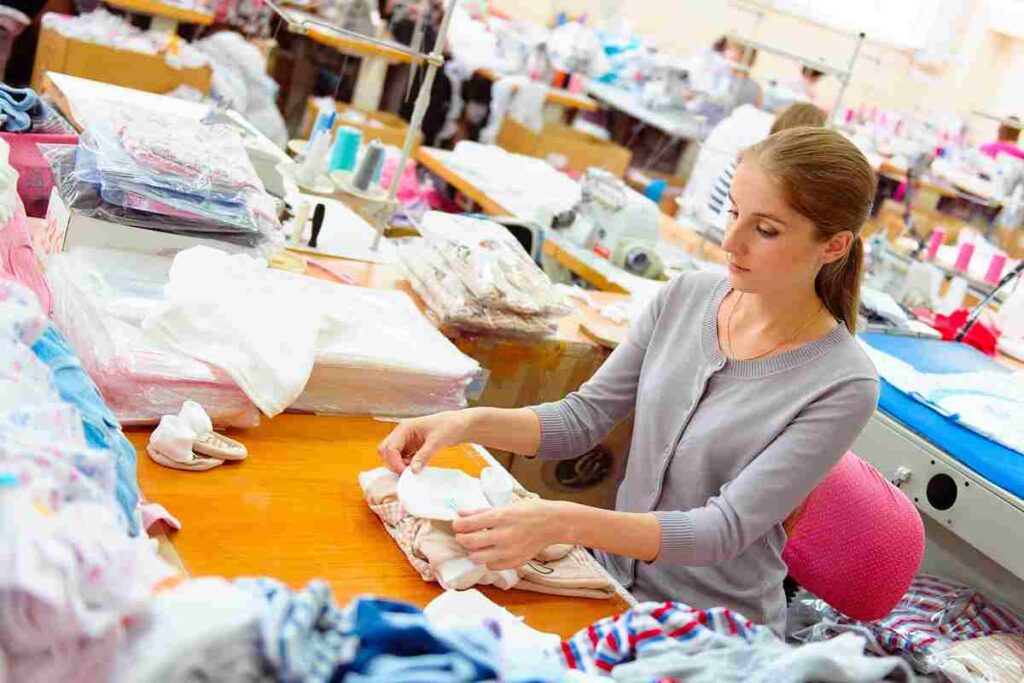
The Real Deal About Fashion Factories
First thing—forget whatever image you have in your head of a fashion factory. It’s not just rows of people at sewing machines (though yeah, there’s definitely that too).
These places are more like organized chaos. You’ve got fabric everywhere, machines running non-stop, people moving between stations, and somehow it all comes together into the shirt you’re wearing right now.
My friend Sarah actually worked quality control at a garment manufacturing place for a summer during college. She said the noise level alone was insane—hundreds of sewing machines going at once sounds like a swarm of mechanical bees. You get used to it, apparently, but those first few days? Brutal.
How They Actually Make Your Clothes
Okay, so here’s the breakdown of what happens from design to the package showing up at your door:
- Someone turns a sketch into actual patterns in all the different sizes (this part’s mostly digital now)
- They lay out massive rolls of fabric and cut through like 50 layers at once with these huge industrial cutters
- Each worker handles one specific part – maybe you’re the pocket person, maybe you’re the collar person, all day long
- They add all the finishing bits like tags, buttons, whatever
- Someone checks each piece to make sure it’s not messed up before packing
But here’s where it gets weird. Your one shirt? The fabric might’ve been woven in one country, dyed in another, cut somewhere else, then sewn in yet another place. It’s like a global relay race, except with your t-shirt.
Where This Stuff Actually Gets Made
Geography lesson time, but I promise it’s actually interesting.
Bangladesh is absolutely massive for cheap clothes. I’m talking thousands of factories pumping out basics for brands you’ve definitely heard of. The whole country basically runs on making clothes at this point.
China is still the biggest player even though it’s getting more expensive to manufacture there. They’ve just got everything figured out—the factories, the fabric suppliers, the shipping routes. If you need 100 shirts or 100,000 shirts, they can do it.
Vietnam has blown up recently. A lot of brands moved production there over the last ten years or so. The quality’s gotten really good too.
India does everything from massive factory production to these small workshops where someone’s grandmother is doing intricate embroidery by hand. The range is huge.
What It’s Actually Like Working There
Not gonna sugarcoat this part—working in most garment factories kind of sucks.
You’re standing for 10-12 hours. You’ve got quotas breathing down your neck. And the work is mind-numbingly repetitive. Imagine attaching the same sleeve to the same shirt style for your entire shift, every single day. Some people do that for years.
The Speed Is Genuinely Crazy
Here’s a stat that broke my brain: a good sewing operator can crank out about 50-60 pieces every hour. Do the math across a whole factory floor with hundreds of workers, and you start understanding how one clothing factory can make 50,000 items in a month.
They’ve got machines for everything you can think of:
- Machines that only do seams (and they do them perfectly, every time)
- Specialized ones for stretchy athletic wear
- Machines that make buttonholes and attach the button in one go
- Industrial presses that can finish a dress shirt in like five seconds
It’s all engineered for maximum speed. Quality control? That’s supposed to catch the mistakes later.
The Fast Fashion Problem (Yeah, We Gotta Talk About It)
This is where I start getting uncomfortable, honestly.
That $8 dress you bought? Someone made that. Multiple someones, actually. And the only way the math works out for it to cost $8 is if those people got paid basically nothing.
I’ve read stuff about textile factories where workers make two or three dollars for a full day’s work. That’s not a typo. Your fancy latte costs more than someone’s daily wage in some garment manufacturing facilities.
And before you say “well, they should just shut those places down”—it’s complicated. These factories employ millions of people who need those jobs, even if the conditions are rough. There aren’t a ton of other options in a lot of these places.
What “Good” Factories Look Like (When They Exist)
Some fashion factories are actually trying to do right by their workers. You can tell because they’ll have:
- Actual livable wages instead of poverty-level pay
- Buildings that won’t collapse (yes, this has been a problem)
- Reasonable shifts without forcing people into 16-hour days
- Proper safety equipment and waste disposal
- Workers who can speak up without getting fired
Certifications like Fair Trade or GOTS mean someone external actually checked things out. They’re not perfect, but they’re better than nothing.
The Supply Chain Is More Tangled Than You Think
Wild fact: sometimes even the brands don’t know exactly where all their stuff is made.
The fashion factory on your tag might’ve just done the final assembly. The fabric came from Factory A. The thread from Supplier B. The zippers from Company C in a completely different country. The whole textile industry is this massive interconnected web.
That’s why you’ll occasionally see news stories about big brands “discovering” their clothes were made in sketchy factories. Sometimes they legitimately didn’t know because the supply chain is so convoluted.
Tech Is Starting to Help (Maybe)
Some clothing manufacturing places are using blockchain now to track everything from raw material to finished product. Sounds fancy, but basically it’s just a way to actually know where stuff came from.
And automated sewing is becoming a thing for basic items. It’s expensive to set up, but it means some production is coming back to countries with higher labor costs because robots don’t care about minimum wage.
What You Can Actually Do About All This
Look, I’m not here to make you feel terrible about your wardrobe. But knowing stuff helps.
Super cheap prices are a red flag. Like, I’m sorry, but a $4 t-shirt? Someone got screwed in that transaction, whether it’s the worker, the environment, or both.
Brands that talk about their manufacturing are usually better. If a company proudly shows you their garment factories and workers, that’s a good sign. If they’re silent about it? Suspicious.
Those certification labels matter. When you see legit third-party certifications, at least someone bothered to inspect the place.
“Made in [wherever]” is basically meaningless. You need way more info than that to know if the fashion factory treats people decently.
Where All This Is Headed
The whole textile industry is changing, though not as fast as it should be.
Labor’s getting more expensive in the traditional manufacturing hubs. Environmental rules are tightening up in some places. And yeah, more people are asking questions about where their clothes come from.
Robots are coming for a lot of the basic sewing jobs. That’s honestly a mixed bag—fewer jobs, but maybe better conditions for the ones that remain.
Some production is moving closer to home. Shipping stuff across the planet takes time and fuel. Some brands are realizing local might actually work better.
Made-to-order might become normal. Instead of making a million units and hoping they sell, some garment factories are testing out making stuff only after someone buys it. Less waste, but harder to scale.
Better materials are in development that don’t require as many toxic chemicals or harsh processes. Hopefully that means healthier conditions for factory workers too.
My Honest Take
The whole fashion factory system isn’t disappearing. We need clothing manufacturing at scale to dress everyone affordably. But man, it could be so much better.
I’m not perfect about this stuff. I’ve bought cheap fast fashion when I was broke and needed something right away. But I try to:
- Buy less random stuff I don’t really need
- Spend more on things that’ll last when I can swing it
- Check where brands make their stuff before buying
- Actually take care of my clothes so they don’t fall apart in six months
- Keep learning about this because the apparel industry is always changing
We change things by asking questions and choosing differently when we can. Not every purchase needs to be some ethical statement, but paying attention counts for something.
Bottom Line
Every single piece of clothing you own started in a fashion factory somewhere. Real people made it. Probably under conditions you wouldn’t want to work in yourself.
The garment manufacturing world is messy and complicated. There are serious problems that need fixing. But there are also people working hard to make things better, innovations happening behind the scenes, and progress being made in pockets of the industry.
Next time you pull something new out of a shipping box or grab your favorite jeans off the floor, just think for a second about the journey it took. All those hands it passed through. All those machines it went through. That awareness? That’s actually the first step toward making the whole system work better for everyone.