
What Is a Health Faucet ?
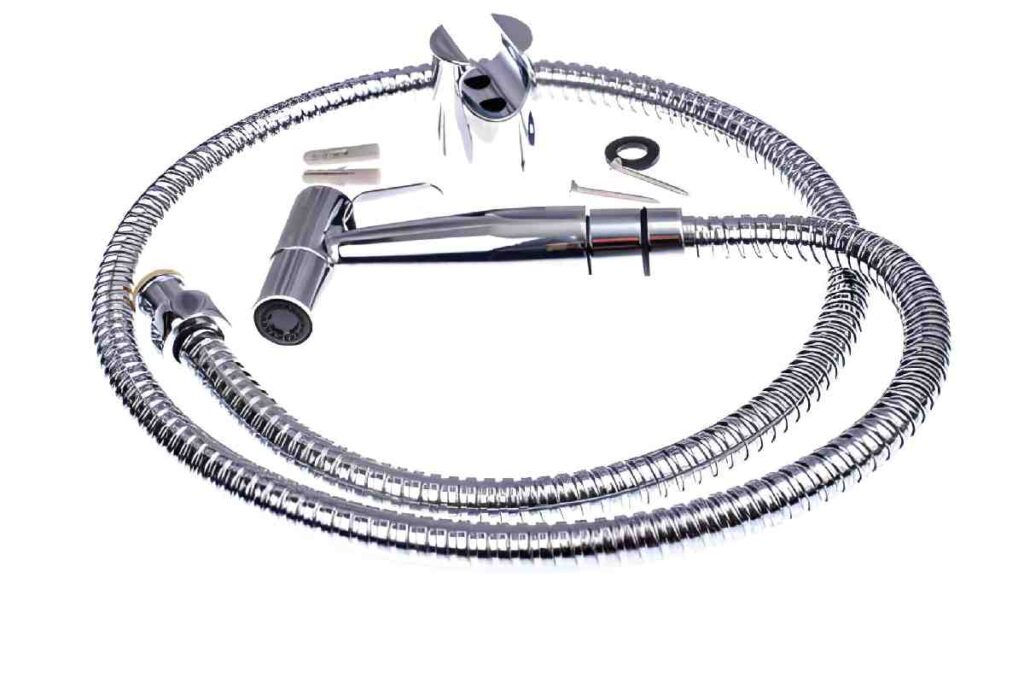
A health faucet is a handheld bidet spray installed next to the toilet. You control the water flow with your hand, aim as needed, and clean yourself with water instead of relying only on toilet paper.
The whole setup includes:
- The spray nozzle with a squeeze trigger
- A metal or reinforced hose that’s usually about 4-5 feet long
- A holder bracket that screws into your wall
- A valve connector that taps into your toilet’s water supply
Most decent ones run between $20 and $50. No electricity, no fancy plumbing required, no monthly subscriptions or whatever. Just a one-time purchase and you’re set.
How I Actually Ended Up Getting One
So here’s how this whole thing started for me.
I was traveling through Thailand a few years back, and literally every bathroom I used had one of these spray things installed. At first, I had zero clue what I was doing. I’m standing there looking at this spray nozzle like it’s some kind of puzzle I need to solve.
But the hostel owner noticed me being confused and gave me a quick rundown. Nothing awkward, just a “hey, here’s how we do things here” kind of conversation. I tried it that first time and honestly felt like I’d been doing everything wrong my whole life.
The difference was immediately obvious. I felt actually clean instead of just… paper-clean, you know?
When I got back to the States, I kept thinking about it. My bathroom routine felt incomplete. So I went on Amazon, found a basic health faucet kit with decent reviews, and figured worst case I waste 25 bucks.
Installed it on a Saturday morning. That was March of last year. Haven’t looked back since.
The Actual Benefits That Made Me a Believer
Yeah, everyone talks about feeling cleaner. That’s obvious. But there’s other stuff that surprised me.
My Toilet Paper Budget Basically Disappeared
I used to blow through toilet paper like crazy. Those big Costco packs that are supposed to last months? Gone in weeks at my place. Now I’m using maybe one-tenth of what I used to because I’m only dabbing dry instead of doing all the actual cleaning with paper.
Quick math here—I was spending probably $35-40 a month keeping stocked up. Now it’s maybe $5. Over a year, that’s like $400 back in my pocket. For a $30 investment. That’s the kind of return that actually matters.
Way Better When You’re Having a Rough Day
TMI maybe, but if you’ve ever had food poisoning or a stomach bug, you know how miserable toilet paper gets after your fifth bathroom trip. It’s rough, it hurts, and you’re basically raw by the end of the day.
With a health faucet? Still not fun being sick, obviously, but at least you’re not dealing with that sandpaper-on-a-sunburn situation. Just gentle water. Makes a genuinely bad day a little less miserable.
My buddy Kevin has Crohn’s disease, and he told me switching to a bidet spray was one of the best quality-of-life improvements he’s made. Coming from him, that means something.
Works for Everyone in the House
I’ve got a six-year-old daughter who’s still figuring out the whole bathroom independence thing. Teaching her to use toilet paper properly was honestly frustrating for both of us. Too much, too little, not thorough enough—it was always something.
The health faucet made it so much easier. She gets it. Point, spray, done. Way less stress for her, way less worry for me about whether she’s actually clean.
Also works great if you’ve got older relatives living with you. My mom stayed with us last summer after her knee replacement, and she mentioned how much easier bathroom stuff was with the spray available. Gave her back some independence when she was already frustrated about needing help with everything else.
The Environmental Thing Is Actually Legit
I’m not gonna pretend I bought this to save the planet or anything. But yeah, cutting down on toilet paper means less waste going to landfills, fewer trees getting chopped down, less industrial processing.
Americans use something like 15 million trees worth of toilet paper every year. That’s insane when you actually stop and think about it. We’re flushing away entire forests.
Using a health faucet doesn’t make you some environmental hero, but it’s a pretty easy way to reduce your impact without changing your lifestyle in any meaningful way.
Installing It Was Shockingly Easy
I’m not handy. Like, at all. I’ve called maintenance for stuff as simple as a leaky faucet because I didn’t trust myself not to flood the apartment. So when I say this was easy, I mean someone with exactly zero plumbing skills can handle it.
Here’s literally what I did:
Turned off the water valve behind my toilet. You know, that little knob thing near the floor. Flushed the toilet to empty the tank. Unscrewed the water line from the bottom of the tank—just twisted it by hand.
Then I attached this T-shaped connector (came with the kit) where that water line was. Screwed the original line back onto one side of the T. Connected the new hose for the health faucet to the other side.
Drilled two small holes in the wall for the holder bracket. Screwed it in. Hung up the spray nozzle.
Turned the water back on. Checked for leaks. There weren’t any.
Whole thing took me maybe 25 minutes, and that included reading the instructions twice because I thought I was missing something. It seemed too straightforward.
If you do get a drip somewhere, it’s usually just because a connection isn’t tight enough. Hand-tighten it more, or wrap some plumber’s tape around the threads. That’s it.
Picking the Right One Without Wasting Money
I learned this lesson the expensive way—my first health faucet was this super cheap $11 thing I grabbed without reading reviews carefully.
Lasted about two months before the trigger mechanism broke and it started leaking. Had to replace the whole thing. Should’ve just spent a bit more upfront.
Here’s what actually matters when you’re shopping:
Build quality over everything – Get something with metal parts, not all plastic. The spray head especially needs to be solid because you’re squeezing that trigger multiple times a day. Brass or stainless steel components last forever. Plastic cracks.
Pressure control that actually works – Some cheaper models are either full blast or nothing. You want something with a gradual trigger or an adjustable dial. Being able to control the intensity makes a huge difference in comfort and usability.
A nozzle design that doesn’t gross you out – You want something that drains properly and doesn’t trap water inside where bacteria can grow. Some fancier models have self-cleaning features, but honestly, a simple design that lets water drain completely works just fine.
Hose length and flexibility matter more than you’d think – A short, stiff hose is annoying to maneuver. Get at least 4 feet of length. The hose should bend smoothly without kinking up every time you move it.
I ended up going with a mid-tier option around $35 from a brand I’d never heard of but had solid reviews. Still going strong more than a year later with zero issues.
Stuff People Worry About That Doesn’t Actually Matter
“Won’t it spray water everywhere and make a mess?”
This was my number one concern before I tried it. Turns out, no. As long as you keep it pointed into the toilet bowl and don’t go crazy with the pressure right away, there’s basically no splash. You figure out the right angle within like two uses.
Way less messy than I imagined. Less messy than dealing with toilet paper, honestly.
“Isn’t cold water uncomfortable?”
Most basic models just use cold water from your line. And yeah, it’s cool. Not ice cold unless you live somewhere freezing, just… cool. You genuinely stop noticing after the first week. Your body adjusts fast.
If you really can’t handle it, there are fancier setups that connect to both hot and cold water, but they cost more and need more involved installation. I’ve never felt like I needed it.
“How do you dry off after?”
You still need to pat dry with something. I use a couple squares of toilet paper. Some people keep a small towel. Others use those reusable cloth wipes and throw them in the wash.
Point is, you’re using like 90% less paper than before, which is the whole benefit anyway.
Getting Used to It Takes Like Three Days
Your first time using a health faucet will probably feel weird. Maybe even awkward. You’re figuring out how much pressure to use, what angle works best, how long to spray.
I definitely sprayed my leg accidentally that first time. And maybe hit the wall once. Whatever. You learn.
By the third or fourth use, it feels normal. By the end of the first week, you’ve got your technique down. By month two, you’ll be side-eyeing regular bathrooms that don’t have one like “how do people live like this?”
My wife made fun of me for the first few days because I kept fiddling with the pressure like I was trying to get my coffee order exactly right. Now she uses it just as much as I do and gives me grief if I forget to refill the toilet paper holder (which, again, lasts way longer now).
Maintaining It Is Stupid Simple
This is another thing I love—there’s basically nothing to do.
Every couple months I’ll wipe down the spray head with some Lysol or whatever disinfectant is under the sink. Check that the hose connections are still tight. That’s about it.
We’ve got hard water where I live, so occasionally I’ll run some vinegar through the spray nozzle if I notice mineral buildup. But that’s maybe twice a year.
No filters to replace, no batteries, no complicated deep-cleaning process. It just sits there and works, day after day, with almost zero effort from me.
Who Should Actually Get One of These
If any of this sounds like you, just get a health faucet already:
- You’ve got digestive issues and bathroom trips are sometimes uncomfortable
- You’re recovering from surgery or having a baby and need something gentler
- You’re tired of spending money on toilet paper every month
- You’ve got kids who are learning bathroom independence
- Someone in your house has mobility challenges that make thorough cleaning difficult
- You care about reducing waste but don’t want to make huge lifestyle changes
Basically if you’re a human who uses bathrooms regularly (so, everyone), there’s a pretty good chance this simple upgrade makes your life at least a little bit better.
My Honest Take After a Year of Using One
A health faucet isn’t going to revolutionize your entire existence or solve major life problems. Let’s be real. It’s a bathroom spray nozzle.
But for something that costs less than taking your family out to dinner and takes half an hour to install? The improvement to your daily routine is legit. You feel cleaner. You save money. You use less paper. And you stop wondering why this isn’t just standard in every bathroom.
I’m not trying to sell you anything here. I don’t work for Big Bidet or whatever. I’m just a regular person who tried something different, liked it way more than expected, and thinks other people would probably feel the same way.
If you’re even a little curious, grab a basic model this weekend. Install it. Use it for two weeks. If you hate it, you’re out 30 bucks and you learned something about yourself. If you love it, welcome to the club of people who can’t shut up about their health faucet.
Either way, at least you’ll know instead of wondering.