
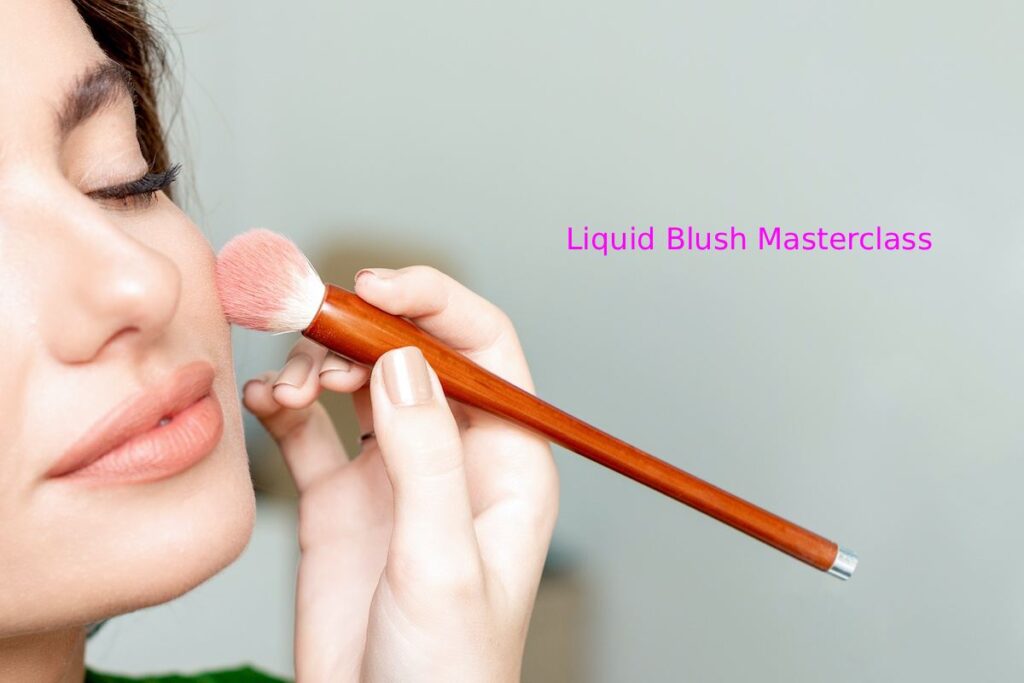
Why Your Liquid Blush Looks Patchy (and How to Fix It)
We’ve all been there: you’ve spent twenty minutes perfecting your base, only to apply a “cult-favorite” liquid blush that immediately lifts your foundation, leaves a stubborn pink streak, or “pills” into tiny grey rolls. It’s frustrating, expensive, and usually results in you wiping everything off and starting over.
The industry usually tells you that you just need to “blend faster” or “use less product.” That advice is oversimplified and often wrong. The real culprit isn’t your technique—it’s a chemical mismatch between your skincare, your foundation, and your blush. By understanding the Formula-First Framework, you can stop guessing and start achieving a seamless, “lit-from-within” glow that lasts until your evening double-cleanse.
Key Takeaways
- Match Your Bases: Always pair water-based blushes with water-based foundations to prevent pilling.
- The “Neutral-Face” Rule: Stop smiling during application; it causes the pigment to “drop” once your muscles relax.
- Know Your Ingredients: Identify if your blush is a water-stain, a silicone-blurrer, or an oil-emulsion by checking the first three ingredients.
- Underpainting is King: For high-pigment formulas, apply blush under your skin tint for the most natural finish.
- UK Selection: Our top picks focus on formula stability and availability at retailers like Space NK, Boots, and Cult Beauty.
size=3 width=1188 style=’width:712.8pt’ align=center>
The Chemistry of the Flush: Water, Silicone, or Oil?
In the UK market, liquid blushes fall into three distinct chemical categories. To achieve a bio-compatible look, you must match your blush to your skin’s lipid barrier and your existing makeup layers.
Water-Based (The Stains)
These formulas have a high water content and use iron oxides suspended in a fast-evaporating liquid.
- Best for: Oily skin and extreme longevity.
- The Nuance: These provide a “stain” effect but offer zero “playtime.” You have roughly 10 seconds to blend before the pigment anchors to the skin’s surface.
- Watch out for: Applying these over oil-heavy foundations will cause the product to bead up like water on a waxed car.
Silicone-Based (The Blurrers)
Identified by ingredients like Cyclopentasiloxane or Dimethicone near the top of the list.
- Best for: Textured skin, large pores, and users who want a “soft-focus” finish.
- The Nuance: These are the most user-friendly. They glide over the skin and don’t “set” instantly, allowing for more blending time.
Oil/Emollient-Based (The Dew-Makers)
Rich in humectants like Glycerin and skin-replenishing lipids like Squalane.
- Best for: Mature skin and the dry UK winter climate.
- The Nuance: These rarely “set” fully, maintaining a dewy look all day. However, they require a light dusting of translucent powder if you want them to stay put for more than 6 hours.
[INSERT GRAPHIC: A Compatibility Matrix table showing “If your Foundation is [X], your Blush should be [Y]” to avoid pilling.]
Beyond the “Apples”: The Precision Placement Strategy
The most common piece of advice in makeup—”smile and apply to the apples of your cheeks”—is fundamentally flawed for liquid formulas. When you smile, your malar fat pads move upward and outward. If you apply pigment there, the color “drops” toward your jawline the moment your face returns to a neutral expression, creating a saggy, muddy appearance.
The “Neutral-Face Lift” Method:
Keep your face relaxed. Locate the top of your zygomatic bone (cheekbone) and apply the pigment slightly higher than you think—starting roughly under the outer corner of your eye and blending up toward the temple. This creates an optical “lift” and keeps the pigment away from the nasolabial folds.
The Sun-Kissed “W” Placement:
For a youthful, “just back from the Cotswolds” look, dot the blush across the bridge of the nose and the highest points of the cheeks. This mimics where the sun naturally hits the face.
[INSERT GRAPHIC: A face map diagram illustrating “The Lift” vs. “The Plump” placement zones based on facial anatomy.]
The “Underpainting” Protocol for Beginners
If you are intimidated by high-pigment liquids (like the Rare Beauty Soft Pinch), use the Underpainting method.
- Apply your SPF and primer as usual.
- Apply a generous amount of liquid blush to your cheeks. You will look like a clown—this is intentional.
- Stipple your foundation or skin tint over the blush using a damp sponge.
Why it works: The foundation acts as a filter, diffusing the pigment and making it appear as though the color is coming through your skin rather than sitting on top of it. This eliminates the risk of harsh edges.
Evidence-Based Skin Selection (YMYL Safeguard)
When choosing a liquid blush, the “Clean Beauty” label is less important than non-comedogenic testing and preservative stability. Because liquid blushes contain water, they are breeding grounds for bacteria if not properly preserved.
- For Acne-Prone Skin: Look for “oil-free” labels and avoid Bismuth Oxychloride, a common mineral shimmer that can cause “itching” and breakouts in sensitive pores.
- For Sensitive Skin: Stick to fragrance-free formulas. High concentrations of synthetic fragrance in liquid emulsions are a leading cause of contact dermatitis on the cheeks.
- Safety Source: According to the European Union’s REACH regulation and industry safety assessments, ensure your blush uses stable preservatives like Phenoxyethanol to maintain formula integrity in the tube.
size=3 width=1188 style=’width:712.8pt’ align=center>
The 2026 UK Liquid Blush Edit
| Product Name | Base Type | Finish | Best For | Price (RRP) |
| Saie Dew Blush | Oil-in-Water | Dewy | Dry/Mature Skin | £22 |
| Rare Beauty Soft Pinch | Water/Silicone | Matte/Radiant | Maximum Longevity | £24 |
| e.l.f. Camo Liquid Blush | Water-Based | Satin | Budget/High Pigment | £7 |
| Daniel Sandler Watercolour | Silicone-Hybrid | Seamless | Professional Finish | £18 |
Summary: Your Bio-Compatible Glow Checklist
Before you reach for your blush tomorrow morning, run through this 3-step protocol:
- Check the Base: Is your foundation water-based? Reach for a water-based blush.
- Neutral Face: Apply while your face is relaxed to ensure the “lift” stays where you put it.
- The Window: If using a water-based stain, blend one cheek at a time. Do not “dot-dot” both sides and then blend; the first side will have already set.
size=3 width=1188 style=’width:712.8pt’ align=center>
FAQs
Q: How do I stop my liquid blush from pilling?
A: Pilling usually occurs when you mix a silicone-heavy primer or foundation with a water-based blush. To prevent this, stay “like-with-like.” If your foundation’s first ingredient is water, ensure your blush is also water-based.
Q: Is liquid blush better than powder for mature skin?
A: Generally, yes. Liquid formulas containing humectants like hyaluronic acid or squalane won’t settle into fine lines or emphasize skin texture as easily as dry powders, which can “cake” on the skin’s surface.
Q: How long does liquid blush actually last?
A: A water-based stain can last 10–12 hours, while oil-based dewy blushes typically last 4–6 hours before needing a touch-up. You can extend the wear of any liquid blush by “sandwiching” it under a very thin layer of translucent setting powder.
Q: Can I apply liquid blush with my fingers?
A: Yes, the warmth of your fingers helps melt oil-based and emollient blushes into the skin. However, for high-pigment water-based formulas, a synthetic stippling brush provides a more even distribution and prevents staining your fingertips.
Q: Does liquid blush cause breakouts?
A: Most modern formulas are non-comedogenic, but those with very oily skin should avoid oil-heavy “balm” blushes. Check the ingredient list for heavy oils or Bismuth Oxychloride if you are prone to cystic acne.
Q: What is the best way to blend liquid blush over foundation?
A: Use a “tapping” motion rather than a “rubbing” motion. Rubbing creates friction that lifts the foundation underneath. Using a damp beauty sponge or a soft brush, tap the pigment into the skin until the edges disappear.
Q: Why does my liquid blush disappear after an hour?
A: Your skin might be “drinking” the moisture in the blush. If you have dry skin, the pigments will sit on the surface and rub off easily once the liquid is absorbed. Try a silicone-based formula that creates a film over the skin to lock the pigment in place.
Q: Is liquid blush safe for sensitive eyes?
A: While blush is meant for the cheeks, many people use it on their eyelids. Ensure the product is ophthalmologist-tested if you have sensitive eyes, as the pigments and fragrances used in blushes aren’t always rated for the delicate eye area.