Let’s Talk About Prepping Your Face (The Boring But Necessary Stuff)
How to apply makeup doesn’t have to feel like you’re trying to decode ancient hieroglyphics. Before we even crack open any makeup, we need to address the elephant in the room.
Your skincare matters. Like, it matters A LOT. And no, I’m not about to tell you that you need some crazy 12-step routine that takes an hour. But you do need some basics locked down. Here’s what genuinely makes a difference:
- A decent cleanser: Just something that removes the gunk without making your face feel tight and angry
- Moisturizer: Look, I don’t care what your skin type is. You need this. When I had oily skin, I thought skipping moisturizer would help. NOPE. My skin just freaked out and produced even MORE oil. Hydrate your face. Just do it
- Sunscreen: Yeah, even when you’re inside all day. Those UV rays don’t care about your blinds
- Primer: This isn’t some luxury step. This is literally what makes your makeup stick around
I wasted like two years of my life skipping moisturizer because some YouTuber said oily skin doesn’t need it. My makeup looked terrible. Don’t be like past me.
Getting Your Base Situation Sorted Out
Picking Foundation That Won’t Betray You
Here’s where everyone screws up: they buy whatever foundation their favorite influencer swears by. But here’s the thing—what works on someone else’s face might be a disaster on yours.
Oily skin people: Matte or powder foundations are your best bet. They’ll keep you from looking like a glazed donut by noon (unless that’s your vibe, then do you).
Dry skin crew: Stick with dewy, hydrating stuff. Powder foundation on dry skin looks… well, it looks bad. Like desert landscape bad.
Combination skin gang: You’re playing makeup on hard mode. Sometimes you gotta use different products on different parts of your face. Or find something with a satin finish that doesn’t go too extreme either way.
How I Actually Apply Foundation Now
Beauty sponges are great when they’re damp (not soaking wet, not bone dry—damp). Bounce them on your face instead of dragging them around. Game changer.
Brushes give you more coverage and work well when you need things to look polished. Do little circular stippling motions instead of painting it on like you’re Bob Ross.
Your fingers are honestly slept on. For light coverage days when you just want to even things out? Your fingers work perfectly. Plus the warmth helps the product sink in better.
Concealer: Stop Using It Like Spackle
Can we have a real conversation about concealer? Because I keep seeing people absolutely CAKING this under their eyes and then acting shocked when it looks like the Grand Canyon by 2 PM.
Here’s what actually works:
- Get a concealer that’s one or two shades lighter than your foundation for under your eyes (not five shades lighter—you’re not trying to cosplay a reverse raccoon)
- Make an upside-down triangle under your eyes, not just on the dark circles themselves
- Pat it in with your ring finger—seriously, use your ring finger. It’s naturally weaker so you won’t tug at that delicate under-eye skin
- If you need it to last, set it with a tiny bit of powder. TINY. Not a snowstorm
Eye Makeup Without Losing Your Mind
Real talk—eye makeup is where things can go sideways FAST.
Eyeshadow Without the Drama
Eye primer isn’t negotiable. I don’t care if your eyeshadow palette cost $60 and promises to last through a hurricane. Without primer, it’s gonna crease and fade. Just accept this truth and move on.
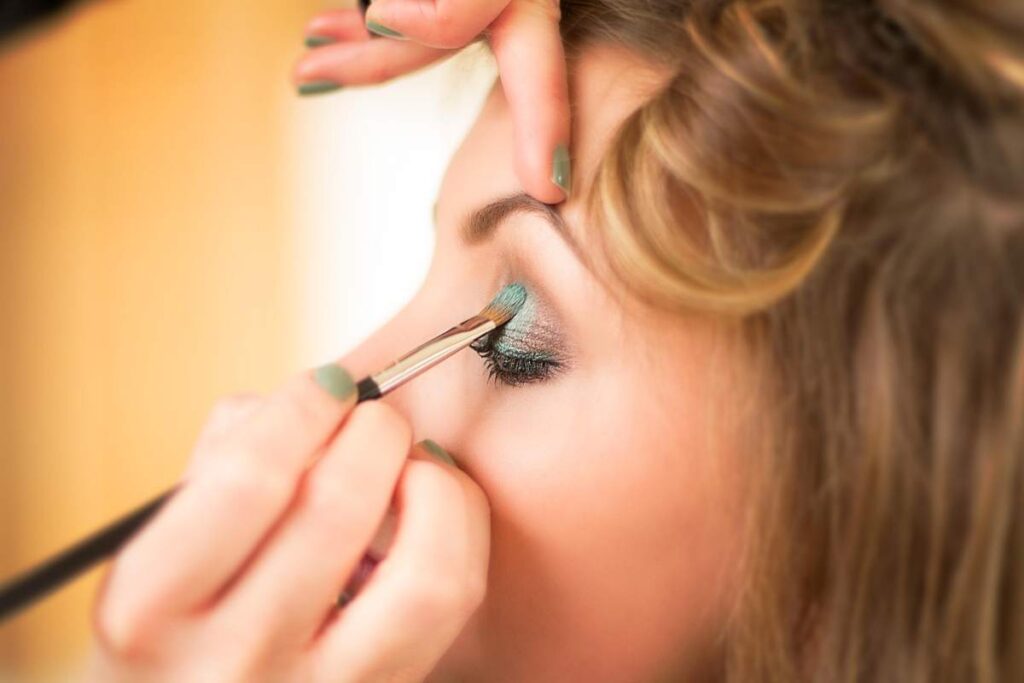
The eyeshadow method that won’t steer you wrong:
- Transition shade goes in your crease first (something that’s close to your skin tone but a bit deeper)
- Medium shade goes on your actual lid
- Darker shade hits the outer corner to add some depth
- Light shimmer or highlight on your inner corner and under your brow bone
And BLEND. Like, blend until your arm hurts a little. Harsh lines look harsh. Use those little windshield wiper motions in your crease and pat the color onto your lid.
Eyeliner for Those of Us Who Can’t Draw
If you’re like me and struggle to draw a straight line even with a ruler, here’s what helps:
Start with less. Way easier to add more than to scrub off a wonky line and destroy all your eyeshadow in the process.
Make little strokes instead of trying to nail one perfect line. Think connect-the-dots.
Tightline your waterline on top. This makes your lashes look thicker without needing to be some kind of eyeliner artist.
For winged liner, I literally use tape as a guide sometimes. Do I feel a little silly? Sure. Does it work? Absolutely. No shame in this game.
Brows: Seriously, Don’t Stress About This
Your eyebrows frame your whole face, but they don’t need to look like Instagram perfection every single day. That’s exhausting.
What I actually do for my brows:
- Brush them upward with that little spoolie brush
- Fill in the sparse spots with light strokes that look like actual hairs (not one solid block of color)
- Hit them with some brow gel so they stay put
Match your brow product to your hair color or maybe go one shade lighter if you’re feeling it. Too dark makes you look mad even when you’re not.
Adding Dimension Without Looking Muddy
This is the fun part but also where things can go wrong real quick if you get too excited with the products.
Bronzer Without Looking Orange
Put bronzer where the sun would naturally hit your face: forehead, tops of your cheekbones, bridge of your nose, chin. Some people do a “3” shape on each side of their face. Whatever helps you remember.
Use a brush that’s kind of fluffy and go slow. Building up is always safer than trying to remove a bunch.
Blush That Looks Natural
Smile (even if you feel ridiculous) and put blush on the apples of your cheeks, then blend it back toward your ears. This lifts your whole face.
I’m a cream blush person because it looks more natural, but powder blush works better if your skin gets oily. There’s no wrong answer here.
Highlight That Doesn’t Blind People
Less is genuinely more with this stuff. Hit your cheekbones, bridge of your nose, cupid’s bow, inner corners of your eyes.
If you can see individual chunks of glitter, you’ve gone overboard. We’re aiming for “lit from within,” not “disco ball at the club.”
Making Sure Your Makeup Doesn’t Melt Off
After all that effort, you need to seal the deal.
Setting powder: Just use it where you get oily—usually your T-zone. Too much powder makes you look older and kind of… dusty.
Setting spray: This is the real hero product. Spray it in an X and T pattern across your face. It melts everything together so your makeup looks like actual skin instead of makeup sitting on top of skin.
Mistakes I Made So You Don’t Have To
- Testing foundation on my hand: Test it on your jawline. Your hand color isn’t your face color
- Thinking primer was optional: It’s not if you want your makeup to last past breakfast
- Forgetting about my neck: Your face and neck should match. I looked like a floating head in photos for months
- Never cleaning my brushes: Gross. This causes breakouts and makes your makeup look patchy
- Piling on too much product at once: Start light, add more if you need it
- Ignoring undertones: This is why some lip colors look amazing on your friend but weird on you
The Tools You Actually Need (Not 500 Brushes)
You don’t need an entire Sephora’s worth of brushes. Here’s what gets used in real life:
- One beauty sponge for foundation
- One fluffy brush for blending eyeshadow
- One smaller brush for detailed eye stuff
- One angled brush for brows and eyeliner
- One fan or small fluffy brush for highlight
- One big brush for powder, bronzer, and setting stuff
And wash these brushes every week with soap and water. Dirty brushes = breakouts and makeup that looks weird.
Making This Work in Real Life
Here’s what nobody wants to admit: your makeup routine needs to fit your actual life, not some fantasy version where you wake up two hours early every day.
Got 5 minutes before you need to leave? Concealer, mascara, maybe some tinted lip balm. Done.
Got 15 minutes? Add some eyeshadow and fuller face stuff.
Got 30 minutes and feeling fancy? Go ahead and do the full thing.
There’s no award for making your life harder. The best makeup is whatever you can actually pull off consistently and feel good wearing.
Figure Out What Works for YOUR Face
Stop trying to make your face look like someone else’s. It’s not gonna happen and you’ll just frustrate yourself.
I spent literal years trying to make cut creases work before I realized hooded eyes just look better with softer, more blended looks. That’s not a problem—that’s just knowing what works for me.
Try new stuff when you’re just hanging at home. Test techniques when the stakes are low. Take pictures in different lighting to see what actually looks good in real life versus under perfect ring light conditions.
The Real Deal on How to Apply Makeup
How to apply makeup really comes down to this: prep your skin properly, use products that actually work with your skin type, blend everything so it looks natural, and practice until it feels normal.
You’re not trying to transform into someone else. You’re just highlighting what you already have. Some days that means full glam. Some days it means concealer and mascara. Both are totally fine.
Get the basics down first. Master those. THEN add the complicated stuff when you feel ready. Your skills will improve just by doing it regularly, not by buying more stuff or watching another 47 tutorials.