
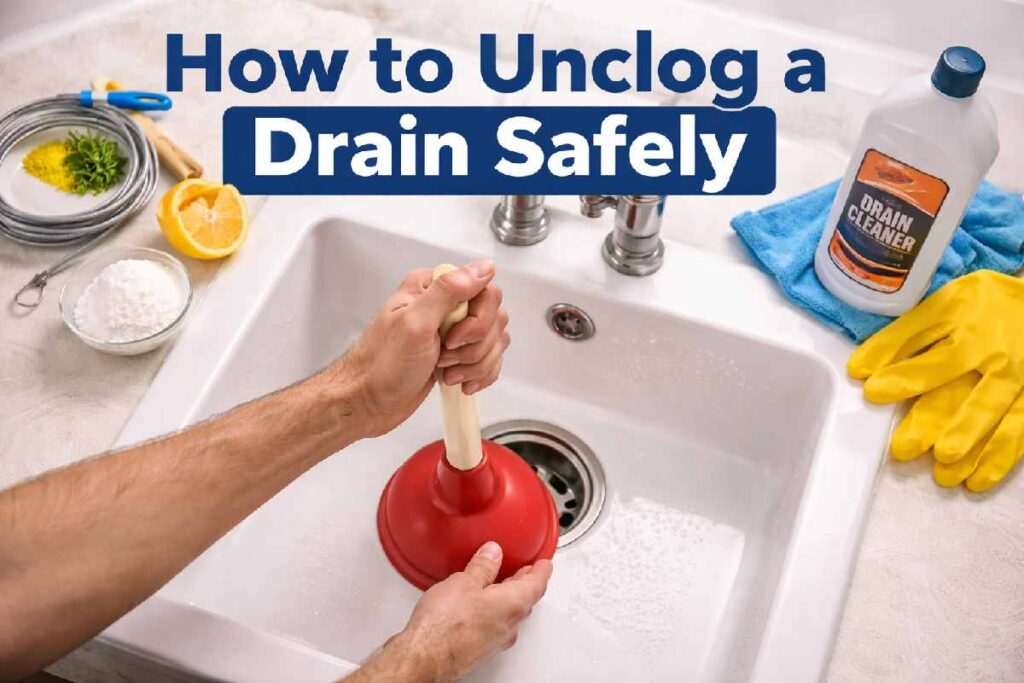
Most drain clogs can be cleared safely without chemicals—but only if you choose the method based on the clog’s location, material, and frequency.
A clogged drain is frustrating because it looks simple. Water isn’t going down, so you try the first hack you remember. Sometimes it works. Often it doesn’t. Worse, repeated “quick fixes” quietly damage pipes, leading to leaks or full replacements later.
The solution is not stronger chemicals. It’s smarter diagnosis.
If you understand where the clog is and what it’s made of, you can unclog a drain faster, safer, and with less mess.
Key Takeaways
- Not all clogs respond to the same method
- Chemicals are overused and often unnecessary
- Repeated clogs mean the problem isn’t fully cleared
- Mechanical removal beats chemical breakdown
- Prevention saves more money than emergency fixes
Why Most Drain-Clog Advice Fails
Most online advice treats all drains the same. They aren’t.
A kitchen sink clog behaves very differently from a shower drain clog. Grease reacts differently than hair. Old metal pipes react differently than PVC.
When advice ignores these differences, people:
- Use boiling water where it hardens grease further
- Pour chemicals into old pipes that corrode
- Clear surface debris while deeper blockages remain
Identify Your Clog Before You Act
Before doing anything, answer three questions.
1. Where is the clog?
- Kitchen sink: grease, food particles
- Bathroom sink/shower: hair, soap residue
- Toilet: paper buildup or foreign objects
- Floor drain: dirt, sediment, outdoor debris
2. What is it likely made of?
- Hair and soap form sticky mats
- Grease coats pipes and traps debris
- Food waste compacts over time
3. Is it recurring?
-
One-time clog = surface blockage
-
Frequent clogs = buildup or pipe slope issue
This diagnosis determines what works.
Safe DIY Methods (Ranked by Effectiveness)
1. Boiling Water (Use Carefully)
Best for: light grease buildup
Avoid if: PVC pipes or complete blockages
Pour slowly in stages. If water backs up immediately, stop.
2. Baking Soda + Vinegar (Limited Use)
Despite popularity, this works mainly for odor control, not heavy clogs.
Use only if:
Drain is slow, not blocked
Follow with hot water after reaction
3. Plunger (Most Misused Tool)
Most people plunge incorrectly.
Correct technique:
- Seal overflow holes
- Use short, forceful plunges
- Maintain water level above the cup
Works well for sinks and tubs.
4. Manual Drain Snake (Best DIY Tool)
Most effective non-chemical option
Physically removes hair and debris instead of dissolving it.
Chemical Drain Cleaners: What You Should Know
Chemical cleaners work by generating heat or dissolving organic matter. They can help—but at a cost.
Pros
- Fast acting
- No tools required
Cons
- Corrode metal pipes
- Weaken joints over time
- Harm septic systems
Use chemicals only when:
- Mechanical methods fail
- Pipes are modern PVC
- Use is rare, not routine
When DIY Fails: Signs You Need a Professional
Call a plumber if you notice:
- Multiple slow drains
- Gurgling sounds
- Water backing up elsewhere
These indicate deeper blockages or venting issues.
Competitive Comparison: Drain Solutions by Country
Popular Drain Cleaner Brands & Prices
| Country | Brand | Avg Price | Type |
|---|---|---|---|
| USA | Drano | $8–12 | Chemical |
| UK | Mr Muscle | £5–8 | Chemical |
| India | Harpic DrainX | ₹120–180 | Chemical |
| Australia | Selleys | AUD 10–15 | Chemical |
| Germany | Rohrfrei | €6–10 | Chemical |
Specialist Availability by Region
| Country | Plumber Availability | Avg Visit Cost |
|---|---|---|
| USA | High | $100–250 |
| UK | High | £80–150 |
| India | Medium | ₹500–1500 |
| Australia | High | AUD 120–300 |
| Germany | Medium | €100–200 |
How to Unclog a Drain in the United States
Typical pipe setup
- PVC or ABS pipes in newer homes
- Cast iron in older properties (pre-1980s)
Common clog causes
- Kitchen grease buildup
- Hair + soap scum in bathrooms
- Garbage disposal misuse
What works best
- Plunger and manual drain snake for most household clogs
- Boiling water only for grease, and only in metal pipes
- Enzyme-based cleaners for maintenance (not emergencies)
What to avoid
-
Frequent chemical cleaner use in older homes
-
Pouring fats or oils down kitchen drains
Professional context
- Licensed plumbers are widely available
- Average service call costs are high, so DIY success matters
US SERP nuance
American users often search with urgency (“fast,” “right now,” “emergency”). Clear decision points—DIY vs call a plumber—perform well.
Prevention Checklist (Most Important Section)
Weekly
- Run hot water after kitchen use
- Use drain strainers
Monthly
- Flush with hot water + mild detergent
- Remove visible hair buildup
Never
- Pour grease down drains
- Rely on chemicals regularly
Quick Country Comparison Summary
| Factor | USA | UK | India |
|---|---|---|---|
| Common Pipe Type | PVC / Cast Iron | PVC / Clay | PVC |
| Best DIY Tool | Drain snake | Drain snake | Manual cleaning |
| Chemical Use | Moderate | Cautious | Limited |
| Plumber Cost | High | Medium | Low |
| SERP Preference | Speed + clarity | Safety + longevity | Cost + practicality |
Trust & Methodology
This guide is based on real-world plumbing practices, manufacturer pipe guidelines, and failure patterns reported by licensed plumbers across residential systems. The focus is safety, longevity, and cost-effective outcomes—not quick hacks.
Conclusion
Unclogging a drain isn’t about finding the strongest product or the most viral hack. It’s about choosing the right method for the right clog, based on where you live, how your plumbing is built, and how often the problem occurs.
FAQs
1. What is the safest way to unclog a drain?
Mechanical removal like plungers or drain snakes is safest and avoids pipe damage.
2. Does baking soda and vinegar really work?
It helps with minor slow drains but won’t clear heavy blockages.
3. Are chemical drain cleaners bad for pipes?
Frequent use can corrode pipes and weaken joints over time.
4. How do I know if my clog is serious?
Recurring clogs, gurgling, or backups signal deeper issues.
5. Can boiling water damage pipes?
Yes, especially PVC pipes if used repeatedly.
6. How often should drains be cleaned?
Light maintenance monthly prevents major clogs.
7. Is it okay to use drain cleaners in septic systems?
Most chemicals disrupt septic bacteria and should be avoided.
8. What tool should every home have?
A basic manual drain snake is inexpensive and effective.
9. Why does my drain clog repeatedly?
Incomplete removal or underlying buildup causes repeat clogs.
10. When should I call a plumber?
If multiple drains are affected or DIY methods fail.