
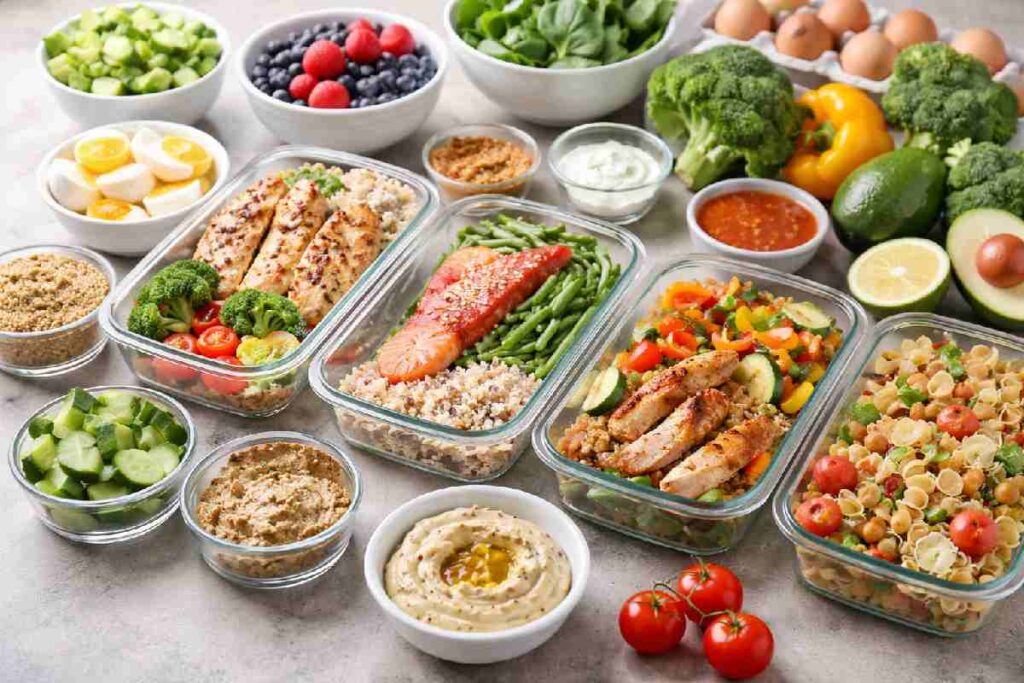
Most people search for meal prep ideas because they want to save time, eat better, or spend less money. Then they cook six identical meals on Sunday, hate them by Wednesday, and quit by week three.
The problem is not effort.
The problem is structure.
The solution is designing a meal prep system that adapts to real life, not forcing yourself into a perfect routine.
Key Takeaways
- Meal prep is a system, not a recipe list
- Flexible components beat full boxed meals
- Fewer rules = higher consistency
- Cost and time matter more than variety
- Sustainability beats motivation
Why Most Meal Prep Ideas Fail
Most top-ranking meal prep articles assume:
- You have a full Sunday free
- You enjoy repetitive meals
- Your schedule never changes
Real life breaks all three assumptions.
Common failure patterns:
- Cooking too much at once
- Planning meals you don’t actually like
- Ignoring storage, reheating, and texture
Meal prep fails when it becomes a chore instead of a support system.
The Meal Prep System That Works
Instead of prepping full meals, use the Base + Protein + Flavor framework.
Base
- Rice, quinoa, pasta, potatoes, flatbreads
Protein
- Chicken, tofu, lentils, eggs, fish
Flavor
- Sauces, spice mixes, chutneys, dressings
You prep each separately and combine differently through the week.
This creates:
- Variety without extra cooking
- Faster assembly
- Less food waste
Beginner Meal Prep Ideas (Low Effort)
If you’re new, start with assembly-only prep.
Examples:
- Pre-washed greens + roasted protein + store-bought dressing
- Boiled eggs + toast + fruit
- Yogurt + nuts + honey
Time investment: 30–45 minutes
Skill required: Minimal
The goal is consistency, not perfection.
Intermediate Meal Prep Ideas (Efficiency Focused)
Once consistency is built, add efficiency.
Strategies:
- Cook dinner in double portions
- Freeze half immediately
- Rotate proteins weekly, keep bases stable
Example:
- Same rice base all week
- Different proteins each day
This reduces decision fatigue without boredom.
Professional / Busy Lifestyle Meal Prep
For people working long hours, hybrid systems work best.
Options:
- Semi-prepared foods
- Pre-cut vegetables
- Occasional meal prep services
Outsourcing is not failure. It’s strategy.
Healthy Meal Prep Ideas for Everyday Nutrition
Healthy meal prep is not about eating “clean” or tracking every calorie. It is about nutritional adequacy that you can maintain week after week.
Most people don’t need extreme diets. They need:
- Enough protein
- Enough fiber
- Fewer ultra-processed foods
What “Healthy” Meal Prep Actually Means
- A protein source at every meal
- Vegetables included most days, not perfectly
- Carbohydrates sized to activity level
Everyday Healthy Meal Prep Ideas
- Balanced bowls
Grains, vegetables, protein, and a simple dressing - One-pot meals
Lentils, beans, soups, and stews that reheat well - Protein-anchored breakfasts
Eggs, yogurt, or leftovers instead of sugar-heavy options
How to Keep It Sustainable
- Use frozen vegetables to reduce prep time
- Rotate sauces instead of core ingredients
- Accept that “good enough” nutrition beats perfection
Healthy meal prep works best when it reduces stress, not adds rules.
Quick Meal Prep Ideas for Busy Workdays
For busy workdays, meal prep needs to be fast to prepare and even faster to eat. If reheating or assembling a meal feels inconvenient, it won’t survive a long workweek.
Quick meal prep is about time friction, not cooking skill.
Time-Saving Meal Prep Strategies
- Limit prep sessions to 60 minutes or less
- Choose foods that reheat well or require no heating
- Keep meals structurally simple
Fast Meal Prep Ideas That Still Work
- Grab-and-go lunches
Wraps, sandwiches, or grain bowls assembled in advance - No-reheat meals
Cold pasta salads, yogurt bowls, salads with protein - Dinner leftovers repurposed for lunch
Roast once, eat twice
Why Speed Matters More Than Variety
When schedules are tight:
- Fewer decisions increase follow-through
- Familiar meals reduce mental load
- Speed prevents skipped meals and takeout defaults
The best quick meal prep idea is the one you can repeat even on your busiest week.
Competitive Comparison Table: Meal Prep Cost by Country
| Country | Avg Weekly DIY Cost | Avg Meal Prep Service | Popular Pattern |
|---|---|---|---|
| USA | $60–80 | $120–150 | Subscription meals |
| UK | £45–60 | £90–120 | Ready meals |
| India | ₹1500–2500 | ₹3500–5000 | Home cooking |
| Australia | AUD 70–90 | AUD 130–160 | Frozen meals |
| Canada | CAD 65–85 | CAD 120–150 | Hybrid |
Brand Comparison (5 Brands, 5 Countries)
| Brand | Country | Specialty | Price Range | Specialist Review |
|---|---|---|---|---|
| HelloFresh | USA | Meal kits | High | Great variety, time-heavy |
| Blue Apron | USA | Gourmet | High | Quality, less flexible |
| FreshMenu | India | Ready meals | Medium | Convenient, higher sodium |
| Mindful Chef | UK | Health-focused | High | Clean ingredients |
| Youfoodz | Australia | Ready-to-eat | Medium | Time saver, less customization |
Cost, Time, and Sustainability Trade-offs
DIY meal prep:
- Cheapest long-term
- Requires planning
Meal prep services:
- Time-efficient
- Higher cost
- Less control
Best option for most people:
DIY base + occasional service support
Who This Article Is Not For
This is not for:
- People looking for extreme diet plans
- One-week transformations
- Aesthetic-only meal prep
This is for people who want food to support their life, not run it.
Final Framework Summary
If meal prep feels hard, simplify:
- Fewer decisions
- Fewer rules
- Better systems
Consistency beats motivation every time.
Author
This article is built using experience-based food planning frameworks, behavioral habit design principles, and widely accepted food safety standards rather than trend-based meal prep advice.
FAQs
1. Are meal prep ideas good for beginners?
Yes. Simple assembly-based meal prep is often better than cooking full meals in advance.
2. How long does meal prep usually take?
Most sustainable systems take 30–90 minutes per week.
3. Is meal prep cheaper than eating out?
Almost always. DIY meal prep typically costs 30–50% less than frequent takeout.
4. Can meal prep work without cooking?
Yes. No-cook meal prep using pre-cut and ready foods works well.
5. Is meal prep safe for 5–7 days?
Most cooked foods are safe for 3–4 days refrigerated. Freezing extends this safely.
6. Do meal prep services save time?
They save cooking time but add cost and reduce flexibility.
7. How do I avoid getting bored of meal prep?
Prep components separately and change flavors daily.
8. Is meal prep good for weight management?
It helps indirectly by reducing impulsive eating.
9. Can meal prep work for families?
Yes, but flexible systems work better than identical meals.
10. Is meal prep suitable worldwide?
Yes. The system adapts across cultures and cuisines.