
Introduction
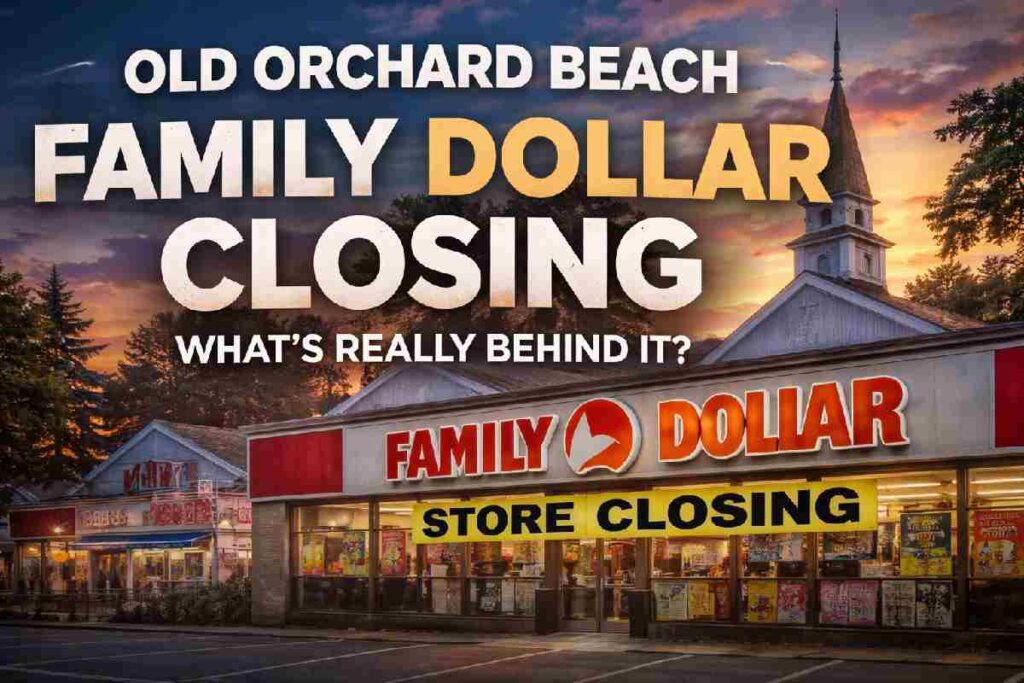
The Old Orchard Beach Family Dollar closing is not just a local retail loss—it reflects a broader shift in discount retail strategy, seasonal economics, and how small towns are being deprioritized by national chains.
For residents, the problem is simple: a familiar low-cost store may be disappearing. The frustration grows when explanations are vague or delayed. The real solution is understanding why this is happening, what usually follows a Family Dollar closure, and how locals can adapt without relying on rumors or false hope.
Direct answer: Yes, reports indicate the Old Orchard Beach Family Dollar is closing or has been slated for closure as part of wider store reductions, not because of a single local failure.
Key Takeaways
-
The closure is driven by national strategy, not just local sales.
-
Seasonal towns are structurally risky for dollar stores.
-
Employees often receive limited transition options.
-
Vacant dollar-store sites can remain empty for years.
-
Local alternatives may be smaller but more reliable long-term.
Is the Old Orchard Beach Family Dollar Really Closing?
In most cases, Family Dollar closures follow a familiar pattern:
-
Internal decisions are made months earlier.
-
Employees are notified first.
-
Public confirmation comes late—or not at all.
This creates confusion. A store may look “open” while inventory quietly shrinks, hours change, and restocking slows. That limbo stage often precedes permanent closure.
Why Family Dollar Stores Are Closing Nationwide
Family Dollar has been aggressively trimming locations that no longer fit its profit model. Industry-wide factors include:
-
Increased theft and shrinkage.
-
Rising labor and logistics costs.
-
Competition from larger discount chains with better margins.
According to analysts and coverage from outlets like Bloomberg and The Wall Street Journal, smaller and lower-volume stores are usually the first to go.
Why Old Orchard Beach Is a High-Risk Location
Old Orchard Beach thrives in summer and slows dramatically in winter. That seasonality is brutal for dollar stores that depend on steady, year-round volume.
Key challenges:
-
Summer crowds don’t offset winter losses.
-
Staffing becomes inconsistent off-season.
-
Property costs remain high even when sales drop.
In simple terms: the math stops working.
What Happens to Employees and the Building
For workers, closures typically mean:
-
Limited transfer options.
-
Short notice periods.
-
Temporary severance, if any.
For the building:
-
Dollar-store layouts are hard to repurpose.
-
Landlords often struggle to find replacements.
-
Locations may sit vacant for extended periods.
Family Dollar vs Other Local Shopping Options
| Option | Pros | Cons |
|---|---|---|
| Family Dollar | Low prices, broad basics | Unstable, shrinking footprint |
| Dollar Tree | Fixed pricing model | Limited product sizes |
| Local Stores | Community support, reliability | Higher prices |
This is where residents face a real trade-off: cost vs consistency.
What Residents and Businesses Should Do Next
Do:
-
Support local stores to keep them viable year-round.
-
Watch for pop-up or seasonal replacements.
-
Stay informed via town updates.
Don’t:
-
Assume another dollar store will replace it quickly.
-
Rely on rumors from social media.
-
Ignore how closures affect nearby small businesses.
How Dollar Store Closures Affect Small Tourist Economies
When a discount retailer exits a town like Old Orchard Beach, the impact extends beyond convenience shopping.
Economic Ripple Effects
-
Loss of low-cost essentials disproportionately affects seasonal workers and retirees.
-
Nearby small retailers may see short-term demand spikes but long-term cost pressure.
-
Reduced foot traffic can impact neighboring strip-mall businesses.
Seasonal Dependency Problem
Tourist towns face a unique challenge:
-
High summer demand creates false positives in annual sales data.
-
Winter months expose unsustainable operating costs.
Why Discount Retail Is Shrinking in Rural and Coastal Areas
The idea that “dollar stores always thrive” is outdated.
Structural Challenges
-
Increased theft (“shrink”) erodes thin margins.
-
Wage inflation affects low-margin retailers most.
-
Supply chain inefficiencies hit remote areas harder.
Strategic Retrenchment
Large retailers are:
-
Closing weaker locations.
-
Consolidating into fewer, higher-performing stores.
-
Prioritizing urban density over geographic coverage.
Key takeaway: Closures are strategic pruning, not failure.
What This Closure Signals for the Future of Brick-and-Mortar Retail
This closure aligns with a broader retail evolution.
Retail Trends at Play
-
Shift toward fewer physical stores with higher revenue per location.
-
Growth of “essential-only” store formats.
-
Increased reliance on regional distribution hubs.
What’s Declining
-
Low-volume, general-merchandise stores.
-
Locations without strong year-round populations.
-
Stores competing solely on price.
Reality check: Physical retail is not dying—but it is becoming more selective.
-
Conclusion
The Old Orchard Beach Family Dollar closing is not simply about one store shutting its doors—it reflects a deeper shift in how national discount retailers evaluate small, seasonal markets. As operating costs rise and corporate strategies favor fewer but higher-performing locations, towns that rely heavily on tourism are increasingly exposed to these decisions.
FAQs
1. Is the Old Orchard Beach Family Dollar permanently closing?
Yes, reports indicate it is closing as part of broader store reductions, not a temporary shutdown.
2. Why are so many Family Dollar stores closing in small towns?
Seasonal demand, rising costs, and lower margins make small towns less viable long-term.
3. Will another dollar store replace it?
Sometimes, but many locations remain vacant due to layout and profit concerns.
4. What happens to employees after closure?
Most are offered transfers or severance, but options are often limited.
5. Is this a sign of economic decline in Old Orchard Beach?
Not necessarily. It reflects retail strategy changes more than local failure.
6. Are Dollar Tree and Family Dollar the same company?
Yes, but they operate under different pricing and inventory models.
7. How can residents adapt without a Family Dollar nearby?
By combining local shopping, bulk buying, and seasonal planning.