
Most PCOD diet guides tell you what to eat. This one tells you why — and why the usual advice keeps failing.
If you’ve tried cutting calories, eating “clean,” or following a generic weight-loss plan and still feel like your body is working against you, you’re not imagining it. PCOD weight gain is driven by a hormonal feedback loop — insulin resistance feeding high androgens feeding more fat storage — and no amount of calorie-counting breaks that loop by itself.
The diagram above shows the cycle. Every food choice you make either tightens it or loosens it. This guide will help you loosen it.
Key Takeaways
- PCOD weight gain is primarily hormonal, not caloric — insulin resistance is the root cause
- A low-GI, anti-inflammatory diet reduces androgens and can restore cycle regularity
- Front-loading calories to breakfast and reducing dinner carbohydrates improves insulin sensitivity
- Fiber and protein at every meal are non-negotiable — they slow glucose spikes and reduce cravings
- Dairy and refined sugar are the two biggest dietary androgen triggers to limit
- Sustainable PCOD weight loss is 0.5–1 kg per week — crash dieting actively worsens hormone balance
Why PCOD Makes Weight Loss Harder Than Usual
Here is the problem most diet advice ignores: in a woman with PCOD, the fat around the belly is not the cause of the hormonal imbalance — it’s the symptom. The actual driver is insulin resistance.
When your cells stop responding to insulin properly, your pancreas compensates by pumping out more insulin. That excess insulin travels to the ovaries and tells them to produce more testosterone and other androgens. Those androgens increase fat storage (especially visceral/abdominal fat), suppress ovulation, and — critically — worsen insulin resistance further. It’s a closed loop.
This is why standard “eat less, move more” advice produces such disappointing results for women with PCOD. You can eat 1,200 calories a day and still not lose weight if your insulin is chronically elevated. Research published in journals like Fertility and Sterility and guidelines from the American Society for Reproductive Medicine consistently point to insulin sensitivity as the primary dietary target in PCOD management.
The right PCOD diet has one job before all others: reduce insulin spikes. Weight loss is a downstream consequence, not the primary lever.
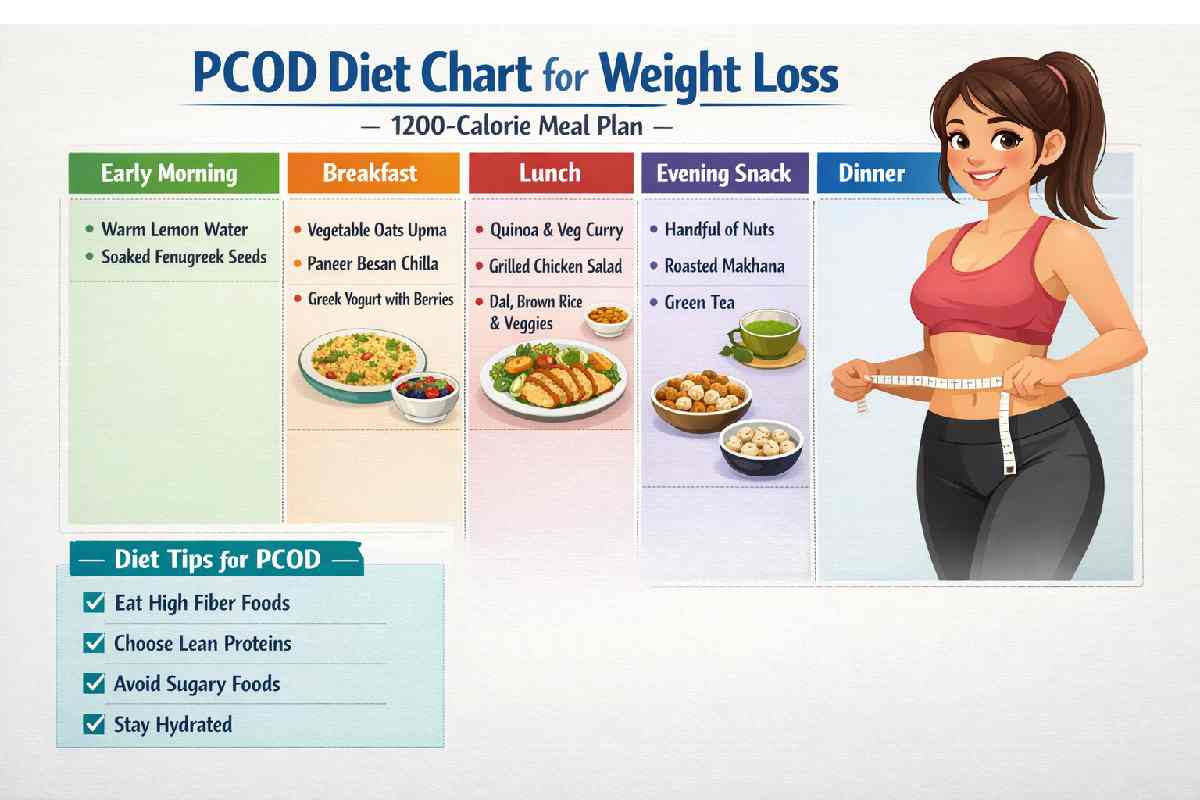
The PCOD Diet Chart: Weekly Meal Plan
| Day | Breakfast (7–9am) | Mid-morning (11am) | Lunch (1–2pm) | Evening snack (4–5pm) | Dinner (7–8pm) |
|---|---|---|---|---|---|
| Mon | 2 eggs + sautéed spinach + 1 slice whole rye toast high protein |
10 almonds + 1 small apple | Brown rice (½ cup) + dal + salad with flaxseed dressing | Greek yogurt (unsweetened) + cucumber | Grilled fish + roasted broccoli + ½ sweet potato |
| Tue | Oats porridge (rolled oats) + chia seeds + berries low GI |
Walnuts (5–6) + green tea | Quinoa + chickpea curry + cucumber raita | Boiled egg + 1 small pear | Lentil soup + stir-fried vegetables + 1 small chapati |
| Wed | Moong dal chilla (2) + mint chutney high protein |
Roasted pumpkin seeds + herbal tea | Millets (jowar/bajra) + palak sabji + salad | Hummus + carrot/celery sticks | Grilled chicken breast + sautéed zucchini + ½ cup barley |
| Thu | Smoothie: spinach + flaxseed + berries + almond milk (no sugar) low GI |
Handful mixed nuts | Rajma (kidney beans) + brown rice ½ cup + salad | Sprouts chaat (no added sugar) | Baked tofu + stir-fried bok choy + cauliflower rice |
| Fri | 2 scrambled eggs + avocado + 1 slice multigrain toast high protein |
1 small orange + green tea | Mixed bean salad + grilled paneer (100g) + roti (1, whole wheat) | Roasted chana + lemon water | Grilled salmon + steamed asparagus + small baked potato |
| Sat | Vegetable upma (semolina reduced, more veggies) + coconut water low GI |
Almond butter on 1 rice cake | Whole wheat pasta (½ cup) + tomato-basil sauce + chicken/tofu | Greek yogurt + flaxseeds | Dal khichdi (light) + sautéed greens |
| Sun | Masala omelette (2 eggs, no cream) + sautéed mushrooms high protein |
Fresh coconut water + small guava | Brown rice + sambar + vegetable stir fry | Walnuts + 1 small banana | Grilled prawns / paneer tikka + roasted cauliflower + 1 small roti |
Meal Timing: Why It Matters More Than You Think
The hormonal rationale for meal timing in PCOD is clear: insulin sensitivity is highest in the morning and drops through the day. Front-loading your calories and carbohydrates to the first half of the day means those carbs are processed when your body handles glucose most efficiently. Eating a large, carb-heavy dinner — the most common Indian and South Asian eating pattern — is one of the worst things you can do for PCOD.
Practical timing rules:
- Breakfast within 1 hour of waking (keeps cortisol from triggering insulin spikes)
- No more than 4–5 hours between meals
- Dinner before 8 pm wherever possible
- No fruit juice, no sweetened drinks at any time of day
Macronutrient Split for PCOD
A reasonable daily target:
- Carbohydrates: 35–40% (all low-GI sources)
- Protein: 30–35% (lean meats, legumes, eggs, paneer/tofu)
- Healthy fats: 25–30% (olive oil, nuts, seeds, fatty fish)
This is not a ketogenic diet. It’s a moderate-carbohydrate, protein-forward approach. Severe carbohydrate restriction can work short-term but often increases cortisol and disrupts thyroid function — both problematic for PCOD.
Foods to Avoid — and the Hormonal Reason
low-GI carbs
Best carbohydrate choices
Stabilise blood sugar, slow digestion, reduce insulin spikes.
- Rolled oats / oat bran
- Brown rice, millets
- Quinoa, barley
- Sweet potato
- Whole wheat / multigrain
- Legumes (dal, rajma, chana)
protein
Best protein sources
Reduce hunger hormones, preserve muscle, slow digestion.
- Eggs (whole)
- Chicken breast, fish
- Paneer, tofu
- Greek yogurt (unsweetened)
- Lentils, chickpeas
- Whey or plant protein
healthy fats
Best fat sources
Reduce inflammation, support hormone production, improve satiety.
- Avocado
- Fatty fish (salmon, sardines)
- Walnuts, almonds
- Flaxseeds, chia seeds
- Olive oil (extra virgin)
- Coconut (moderate)
key micronutrients
Micronutrients that help
Directly improve insulin sensitivity and ovarian function.
- Inositol (found in citrus, legumes)
- Magnesium (dark greens, seeds)
- Zinc (pumpkin seeds, meat)
- Vitamin D (sunlight, fatty fish)
- Chromium (broccoli, whole grains)
On dairy: This is contentious. Some research, including a cohort study cited in the Journal of the Academy of Nutrition and Dietetics, shows that full-fat dairy increases IGF-1 and androgen levels in women with PCOD. However, unsweetened Greek yogurt and small amounts of paneer appear tolerable for most women because their protein content mitigates the insulin effect. The practical rule: avoid milk as a beverage, limit cream and cheese, allow moderate paneer or Greek yogurt.
Dos and Don’ts — Quick Reference
Do:
- Eat breakfast within 1 hour of waking
- Include protein and fiber in every single meal
- Drink 2.5–3 litres of water daily
- Cook with olive oil or cold-pressed coconut oil
- Add cinnamon to meals (1/2 tsp/day — shown to improve insulin sensitivity in multiple small trials)
- Eat anti-inflammatory spices: turmeric, ginger, fenugreek seeds
Don’t:
- Skip meals (especially breakfast — this raises cortisol and blood sugar)
- Eat fruit on an empty stomach (spikes glucose faster)
- Replace meals with smoothies that have no protein
- Follow a crash diet under 1,200 calories
- Drink tea/coffee with full-fat milk and sugar
5 Diet Approaches for PCOD — Compared
| Diet approach | Insulin benefit | Androgen effect | Sustainability | Best for PCOD? | Main risk |
|---|---|---|---|---|---|
| Low-GI diet | High | Moderate benefit | High | Excellent | Requires label reading; easy to slip |
| Mediterranean diet ★ | High | Strong benefit | High | Best overall | Calorie-dense if oils/nuts overused |
| Ketogenic (very low carb) | Very high short-term | Reduces androgens | Low | Short-term only | Raises cortisol; hard to sustain; may impair thyroid |
| Intermittent fasting (16:8) | Good | Mixed results | Moderate | Useful as a tool, not a full plan | Skipping breakfast raises cortisol in women |
| Whole-food plant-based | Good | Reduces inflammation | Moderate-high | Good if protein targets met | Easy to under-eat protein; phytate binding of zinc |
PCOD Diet Adaptations by Country
One of the biggest failures in PCOD diet content is that it’s written for a Western white rice–free, legume-rare diet pattern. But global search data shows the majority of people searching this keyword are in India. Followed by the Middle East, Southeast Asia, the US, and the UK. Below is a practical guide to applying PCOD eating principles to real local food cultures.
| Country | Common dietary challenge | Best local food swaps | PCOD-friendly staples | Main pitfall |
|---|---|---|---|---|
| 🇮🇳 India | White rice, maida (refined flour), high-sugar chai, excess dairy in cooking | White rice → millets/brown rice; maida → whole wheat/besan; chai with milk → ginger-lemon tea | Dal, rajma, moong, ragi, jowar, bajra, palak, methi, amla | Skipping breakfast; too much rice at dinner; excess ghee in tadka |
| 🇺🇸 United States | Ultra-processed foods, large portions, high sugar intake, drive-through culture | White bread → Ezekiel or whole grain; sugary cereal → eggs or oats; soda → sparkling water | Quinoa, black beans, salmon, berries, leafy greens, flaxseeds | Hidden sugars in “health” foods; salad dressings with refined oils |
| 🇬🇧 United Kingdom | Heavy reliance on bread, low vegetable variety, biscuits/cakes as snacks | White bread → seeded wholegrain; biscuits → handful of nuts; ready meals → batch-cooked lentils | Mackerel, kale, oats, lentils, berries, Greek yogurt | Vitamin D deficiency (low sunlight) — supplement strongly recommended |
| 🇸🇦 Middle East | White rice, refined bread (pita/samoon), sweetened beverages, lamb-heavy meals | White rice → freekeh or bulgur wheat; pita → whole wheat khubz; sugary drinks → water with lemon/mint | Lentils, hummus, chickpeas, olive oil, za’atar, pomegranate | Over-reliance on fruit for dessert; excess sugar in tea |
| 🇮🇩 Southeast Asia | White rice at every meal, fried foods, sweet drinks (bubble tea, kopi), limited protein diversity | White rice → brown rice or cauliflower rice (half-half); fried snacks → steamed options; sweet kopi → black or plant milk | Tempeh, edamame, fish, sweet potato, kangkung, papaya | Tempeh overconsumption with soy concerns (moderate amounts are fine) |
Weight loss in PCOD can be frustratingly slow. The most discouraging mistake is using the scale as your only progress metric. Here’s what to track instead, and why each marker matters more than weight alone
What to Discuss With Your Doctor or Dietitian
This article is a research-informed starting point, not a clinical prescription. PCOD exists on a spectrum — some women have primarily insulin-resistant PCOD, others have predominantly inflammatory or adrenal-driven variants. The right dietary strategy may differ based on which subtype you have.
Before making major dietary changes, ask your doctor about:
- Your fasting insulin and HOMA-IR score (to confirm insulin resistance)
- Testosterone, DHEA-S, and androgen panel (to understand your androgen profile)
- Thyroid function (hypothyroidism commonly co-occurs with PCOD)
- Vitamin D, B12, and iron levels (deficiencies are common)
If possible, work with a registered dietitian who specialises in hormonal health or reproductive nutrition. A personalised meal plan based on your blood work, food preferences, and lifestyle will always outperform a generic one.
Authoritative sources referenced in this article:
- Fertility and Sterility — peer-reviewed reproductive medicine journal
- American Society for Reproductive Medicine (ASRM) — clinical PCOD guidelines
- Human Reproduction — research on inositol and PCOD
- Journal of the Academy of Nutrition and Dietetics — dairy and androgen studies
Conclusion
PCOD weight gain is not a willpower problem. It is a hormonal and metabolic problem — and once you understand that, the solution stops being “eat less” and starts being “eat smarter.”
The diet chart and principles in this guide share one common thread: every recommendation is designed to reduce the insulin stimulus that drives androgen overproduction. Lower insulin means less ovarian stimulation, less fat storage, more regulated cycles, and — as a downstream effect — sustainable weight loss.
FAQ
1.Can I eat rice with PCOD? Yes — choose brown rice or millets, keep portions to ½ cup, and always pair with protein and vegetables.
2: Is milk bad for PCOD? Full-fat milk can raise androgens — switch to unsweetened almond or oat milk for daily use.
3: How long to see results on a PCOD diet? Most women notice hormonal improvements — better skin, more regular cycles — within 4–8 weeks.
4: Can PCOD be managed without medication? Mild PCOD often responds well to diet and lifestyle changes alone; moderate to severe cases usually need both.
5: What is the best diet for PCOD weight loss? The Mediterranean diet — low-GI carbs, lean protein, healthy fats, and anti-inflammatory foods — has the strongest evidence