What Makes Revlon Vegan Dyes Different from Regular Hair Dye?
Here’s the thing most people don’t realize: not all vegan hair dyes are created equal. When we’re talking about Revlon’s vegan hair color options, we’re looking at formulas that skip animal-derived ingredients like keratin, carmine, and certain conditioning agents that come from animals.
But vegan doesn’t automatically mean “gentle” or “natural.” It just means no animal products or testing. Revlon’s approach combines this vegan philosophy with their decades of hair color technology—which honestly matters more than people think.
What you won’t find in Revlon vegan formulas:
- Animal-derived proteins or keratin
- Carmine (crushed insects for red pigments)
- Beeswax or honey derivatives
- Animal-derived glycerin
- Guanine (fish scales for shimmer)
The Real Talk About Revlon ColorSilk Vegan Options
Revlon’s ColorSilk line includes several vegan-friendly shades, and this is where things get interesting. Not every shade in their collection is vegan (more on that headache in a minute), but the ones that are perform surprisingly well.
I tested their Medium Brown and Dark Blonde shades on my hair, which tends to be pretty resistant to color. The ammonia-free options gave me solid gray coverage without that harsh chemical smell that usually has me opening every window in my apartment.
Gray Coverage Performance
If you’re dealing with gray hair, this matters. The vegan dyes from Revlon handle grays about as well as their traditional formulas—which is saying something because their regular line is already pretty reliable. I’ve seen people with 50% gray coverage get completely even results with one application.
The key is following the timing instructions exactly. Don’t get lazy and rinse early. Give it the full development time.
How Revlon Vegan Hair Color Stacks Up Against Competitors
Let me break down what I’ve learned comparing these to other vegan hair dyes on the market:
Revlon’s advantages:
- Price point is way more accessible than Madison Reed or dpHUE
- Available at drugstores and major retailers
- Color range is decent for a vegan line
- Actually covers resistant grays
Where they fall short:
- Not their entire line is vegan (confusing as hell)
- Limited vibrant or fashion color options
- Some shades fade faster than traditional formulas
- Packaging doesn’t always clearly mark vegan options
I’ve tried brands like Arctic Fox and Manic Panic for fun colors, but for classic, natural-looking shades that I can grab at Target? Revlon’s vegan options hit differently.
The Color Range Situation (And Why It’s Frustrating)
This is where I need to keep it real with you. Revlon doesn’t make it easy to figure out which shades are vegan. You’ll need to do some homework before buying because the vegan formulas are mixed throughout their regular line.
Vegan-friendly Revlon ColorSilk shades typically include:
- Most natural browns and blacks
- Several blonde shades
- Select red tones
But here’s the annoying part: you’ve got to check the ingredient list on each specific shade. The box doesn’t usually scream “VEGAN” at you, so you’re left squinting at tiny ingredient text in the hair color aisle like you’re decoding ancient scrolls.
Pro tip: Check Revlon’s website or call their customer service before making the trip. Save yourself the frustration.
How Long Does Revlon Vegan Hair Dye Actually Last?
In my experience, you’re looking at about 4-6 weeks of solid color before you’ll want to refresh your roots or reapply. The semi-permanent options fade more gradually—closer to 20-28 shampoos depending on how often you wash your hair.
I wash my hair 2-3 times a week, and the Medium Brown I used lasted me a solid five weeks before looking dull. Not bad considering the price point hovers around $3-6 per box.
Factors that affect longevity:
- Your hair’s porosity (damaged hair grabs color differently)
- Water temperature when washing (hot water = faster fade)
- Shampoo type (sulfate-free extends color life)
- Sun exposure and chlorine
- Your natural hair color underneath
The Application Process: What You Need to Know
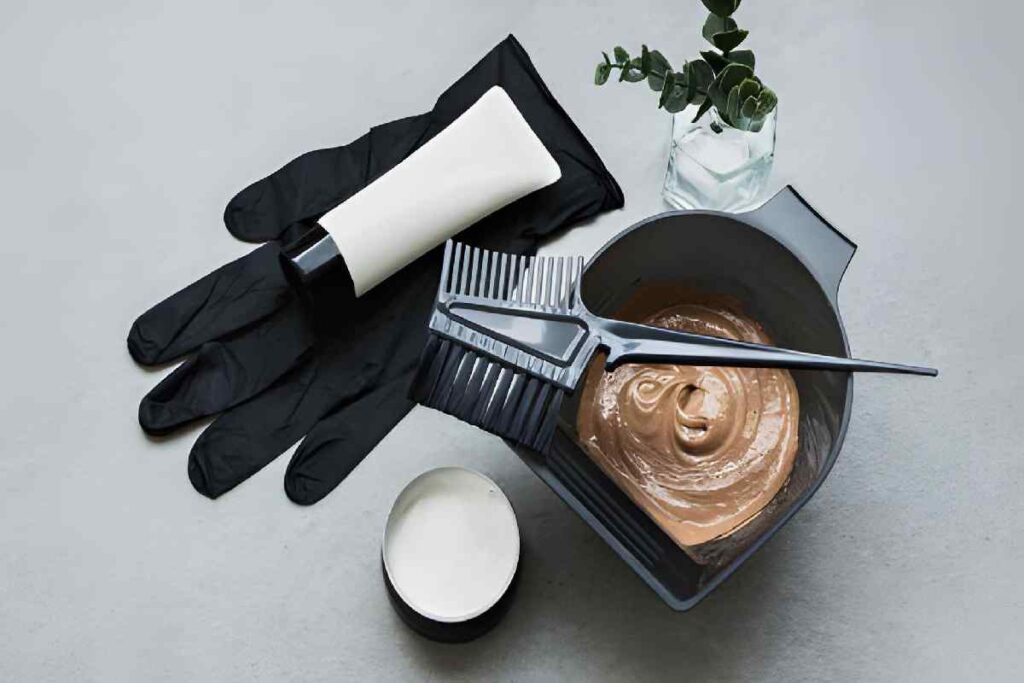
Applying Revlon vegan dyes isn’t rocket science, but I learned a few tricks that made my results way better the second time around.
First off, do a strand test. I know it’s tedious, but vegan formulas can process differently than what you’re used to. Especially if you’re switching from traditional dye to plant-based alternatives.
My application routine:
- Start with unwashed hair (1-2 days of buildup actually helps)
- Apply petroleum jelly along your hairline to prevent staining
- Section your hair into four quadrants
- Work from roots to ends, saturating thoroughly
- Massage it through like you mean it
- Set a timer—don’t guess the development time
- Rinse with lukewarm water until it runs clear
- Use the included conditioner (it’s actually good)
The formula itself mixes easily and doesn’t have that goopy, hard-to-spread consistency some box dyes have. It’s creamy enough to work through your hair without dripping all over your bathroom.
Ingredients Worth Paying Attention To
Even though these are vegan, you’ll still find some synthetic ingredients. That’s normal and honestly necessary for permanent hair color to work effectively.
Common ingredients in Revlon vegan formulas:
- PPD (p-Phenylenediamine) in some permanent shades
- Ethanolamine instead of ammonia in ammonia-free versions
- Synthetic conditioning agents
- Plant-derived oils like argan or coconut
- Botanical extracts for shine
If you’re sensitive to PPD or have contact dermatitis, check the formula carefully. Vegan doesn’t equal hypoallergenic or suitable for sensitive scalps.
Cost Breakdown: Is It Actually Budget-Friendly?
Here’s where Revlon vegan dyes really shine—your wallet won’t hate you. At $3-7 per box depending on where you shop, you’re spending 10-15% of what you’d drop at a salon for similar results.
I compared costs over six months of regular coloring:
Salon visits: $75-150 every 6-8 weeks = $450-900 annually
Revlon at-home: $5 every 6 weeks = roughly $40-50 annually
Even if you mess up once and need to buy a corrective shade, you’re still ahead financially. And honestly, the formula is forgiving enough that major mistakes are pretty rare if you follow directions.
Damage Control: How Harsh Are These on Your Hair?
Real talk—any permanent hair dye causes some damage. Chemistry is chemistry, vegan or not. But I noticed my hair felt less crispy and dry compared to some traditional formulas I’ve used.
The ammonia-free options from Revlon definitely smell better and seem less stripping. My ends weren’t as fried, and I didn’t need to deep condition as aggressively after coloring.
To minimize damage:
- Space out coloring sessions (6-8 weeks minimum)
- Only apply to roots for touch-ups
- Use a weekly hair mask or protein treatment
- Avoid heat styling for 48 hours after coloring
- Sleep on a silk pillowcase (sounds bougie but actually helps)
Finding Revlon Vegan Hair Dyes Near You
Availability is one of Revlon’s biggest perks. You can grab these at:
- CVS and Walgreens
- Walmart and Target
- Grocery stores with beauty sections
- Online through Amazon or Revlon’s website
- Ulta Beauty stores
I’ve found the best selection at Target and Walmart, where they usually stock 15-20 ColorSilk shades. Smaller drugstores might only carry the most popular browns and blacks.