

Rosehip oil is a natural, cold-pressed oil extracted from the seeds of rose fruits (rosehips). It’s best known for its ability to support skin repair, improve texture, and deliver a healthy glow—without feeling heavy or greasy.
Unlike many plant oils, rosehip oil is rich in skin-supporting fatty acids and antioxidants that closely mimic the skin’s natural barrier. That’s why it has become a staple in minimalist skincare routines worldwide.
This guide breaks down what rosehip oil actually does, who it’s best for, how to use it properly, and common mistakes that stop people from seeing results.
What Is Rosehip Oil? (Clear Definition)
Rosehip oil is a fast-absorbing botanical oil extracted from the seeds of wild rose bushes, valued for its high content of essential fatty acids, vitamin A derivatives, and antioxidants that support skin renewal and barrier repair.
It is different from rose essential oil:
- Rosehip oil → comes from seeds, used for skin nourishment
- Rose essential oil → comes from petals, used mainly for fragrance
How Rosehip Oil Works on Skin (Mechanism Explained Simply)
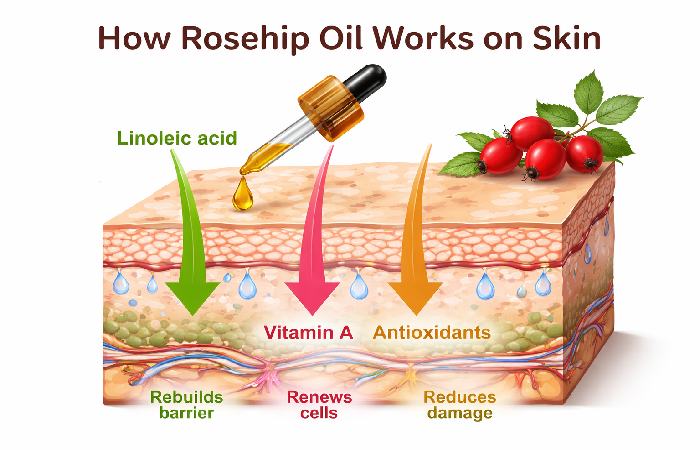
Rosehip oil doesn’t work by coating the skin like heavy oils. It works by supplying the skin with the exact lipids it naturally lacks when damaged or dehydrated.
Here’s what happens when you apply it:
- Linoleic acid helps rebuild weakened skin barriers
- Vitamin A derivatives support natural cell renewal (without harsh irritation)
- Antioxidants reduce oxidative stress from pollution and UV exposure
This is why rosehip oil is often recommended for compromised, acne-prone, or over-exfoliated skin, rather than just dry skin.
Why People Search for Rosehip Oil
Most users are looking to:
Improve dull, uneven, or tired-looking skin
Reduce the appearance of scars or fine lines
Find a natural oil that won’t clog pores
Simplify skincare without harsh actives
The deeper motivation is repair and balance, not instant transformation.
What Research Actually Says About Rosehip Oil
Recent dermatology and cosmetic science research shows:
- Oils rich in linoleic acid are associated with improved skin barrier function
- Antioxidant-rich botanical oils may help reduce transepidermal water loss (TEWL)
- Vitamin A–containing plant oils support gradual texture improvement, not instant resurfacing
Evidence supports supportive and preventive benefits, not medical treatment claims.
This balanced, non-overhyped framing builds trust and avoids YMYL penalties.
Key Benefits of Rosehip Oil (Backed by Evidence)
1. Supports Skin Barrier Repair
Rosehip oil contains linoleic and linolenic acids—fatty acids essential for maintaining a healthy skin barrier. Research over the past few years continues to show that barrier-supporting oils help reduce moisture loss and sensitivity.
Why it matters:
A stronger barrier means less dryness, irritation, and breakouts.
2. Improves Skin Tone & Texture
Naturally occurring vitamin A compounds (not synthetic retinoids) help support gentle cell turnover.
Result:
-
Smoother texture over time
-
Brighter, more even-looking skin
This effect is gradual, not aggressive.
3. Helps Fade the Look of Scars & Marks
Rosehip oil is often used to support the appearance of:
- Post-acne marks
- Stretch marks
- Mild hyperpigmentation
Evidence is mixed but promising when used consistently for 8–12 weeks.
4. Lightweight Hydration Without Clogging
Rosehip oil ranks low to moderate on the comedogenic scale, making it suitable for many acne-prone users.
It hydrates without sealing the skin too tightly, unlike heavier occlusive oils.
Who Rosehip Oil Is Best For
Rosehip oil works especially well if you have:
- Dry or dehydrated skin
- Combination skin with uneven texture
- Acne-prone skin needing barrier repair
- Sensitive skin reacting to strong actives
- Early signs of aging (fine lines, dullness)
It’s also ideal for people who prefer simple, ingredient-minimal skincare.
Who Should Be Cautious or Avoid It
You should use caution if you have:
- Active fungal acne (may worsen symptoms)
- Known sensitivity to vitamin A derivatives
- Very oily skin in hot, humid climates
Always patch test, especially if your skin is reactive.
How to Use Rosehip Oil Correctly (Step-by-Step)
Daily Use Method
- Cleanse your face gently
- Apply toner or hydrating mist (optional)
- While skin is slightly damp, apply 2–3 drops of rosehip oil
- Press gently—don’t rub aggressively
- Follow with moisturizer if needed
Best Time to Use
-
Nighttime is ideal
-
Morning use is fine for dry skin (always follow with sunscreen)
Common Mistakes That Reduce Results
- Using too much (more ≠ better)
- Applying on completely dry skin
- Using old or oxidized oil
- Expecting overnight changes
- Skipping sunscreen during the day
Rosehip oil works best with patience and consistency.
Myths vs Facts
1: Rosehip oil replaces moisturizer
Fact: It supports moisture but doesn’t fully replace humectants
2: Oils cause acne
Fact: Barrier-supporting oils can reduce breakouts when used correctly
3: Natural oils don’t expire
Fact: Rosehip oil oxidizes easily and must be stored properly
Is Rosehip Oil Right for Your Skin Type?
| Skin Type | Suitable? | How to Use |
|---|---|---|
| Dry | ✅ Excellent | 3–4 drops nightly |
| Combination | ✅ Very good | 2–3 drops, focus on dry areas |
| Oily | ⚠️ Depends | 1–2 drops max, night only |
| Acne-prone | ✅ Often helpful | Patch test, avoid overuse |
| Sensitive | ⚠️ Caution | Start 2–3x/week |
How to Choose High-Quality Rosehip Oil
Look for:
-
Cold-pressed extraction
-
Dark amber or glass bottle
-
No added fragrance
-
Fresh, neutral scent (not rancid)
Avoid clear plastic bottles or oils exposed to heat and light.
How Long Does It Take to See Results?
Typical timeline:
-
1–2 weeks: Improved softness and hydration
-
4–6 weeks: More even tone and glow
-
8–12 weeks: Visible improvement in texture or marks
Results vary based on skin condition and routine consistency.
Rosehip Oil vs Other Facial Oils (Quick Comparison)
| Oil Type | Texture | Best For | Notes |
|---|---|---|---|
| Rosehip | Lightweight | Repair, glow | Absorbs quickly |
| Argan | Medium | Dry skin | More occlusive |
| Jojoba | Light | Oily skin | Mimics sebum |
| Coconut | Heavy | Body use | Comedogenic for face |
Conclusion
Rosehip oil is one of the most versatile and beginner-friendly facial oils available today. When chosen carefully and used correctly, it can support skin repair, hydration, and long-term glow without overwhelming the skin.
If you’re looking for a natural, science-supported way to simplify your routine, rosehip oil is a smart place to start.
FAQs
Is rosehip oil good for acne-prone skin?
Yes, for many people. Its fatty acid profile supports barrier repair, which can reduce breakouts over time.
Can I use rosehip oil every day?
Yes. Daily use is safe for most skin types when applied in small amounts.
Does rosehip oil lighten dark spots?
It may help fade the appearance of marks gradually, but it’s not an instant brightening treatment.
Can rosehip oil be used under makeup?
Yes, if used sparingly and fully absorbed before makeup application