
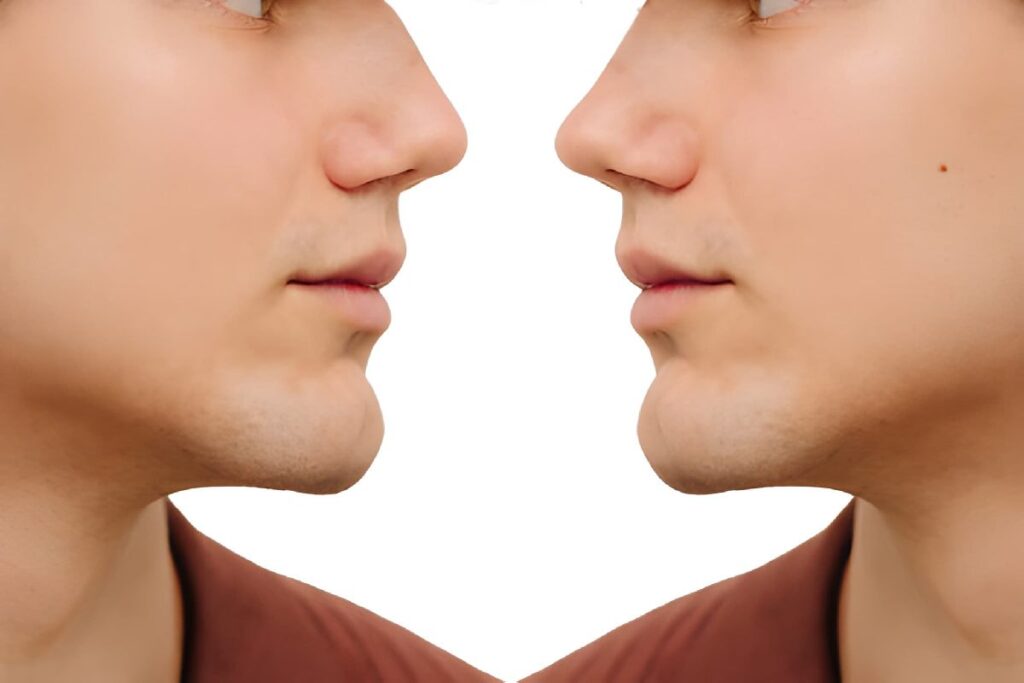
What Exactly Is Septoplasty?
In plain English, septoplasty is a surgical procedure to straighten the wall between your nostrils (called the septum). When that wall is crooked—aka “deviated”—it can block airflow, cause sinus pressure, or make you sound like Darth Vader mid-sleep.
So no, it’s not a nose job (that’s rhinoplasty). Septoplasty focuses on function, not looks—though some folks do combine it with cosmetic tweaks for a two-in-one upgrade.
Why We All Search for Before and After Photos
I get it. When you’re thinking about any kind of nasal surgery, you want visual proof. You want to see:
- Whether your nose shape will change
- How long the swelling actually lasts
- What “normal” looks like after recovery
- If the results are worth the time and money
The thing is, a deviated septum lives inside your nose. It’s not like a rhinoplasty where external changes are the whole point. With septoplasty surgery, we’re talking about straightening the cartilage and bone that divides your nasal passages. The real transformation happens where you can’t see it in photos.
What Septoplasty Before and After Pictures Actually Show
Most legitimate before and after septoplasty photos focus on a few key things:
External appearance changes (usually minimal unless combined with rhinoplasty):
- Slight changes to nostril symmetry
- Reduction in external deviation if your septum was severely crooked
- Decreased swelling over time
- Minor tip adjustments if necessary
Internal views (if your surgeon shares these):
- Nasal passages before obstruction
- Straightened septum position
- Improved airway space
- Reduced turbinate size if that was addressed too
Here’s what threw me off at first—some people’s noses look almost identical in before and after pics. And that’s actually a good thing. It means the surgeon fixed the functional problem without changing your appearance. That’s the goal for most of us.
The Timeline Nobody Talks About Enough
When you’re scrolling through septoplasty before and after images, pay attention to the timeline. Recovery isn’t linear, and your nose goes through phases.
Week 1: You look like you got into a fight. Swelling, bruising (especially if you had turbinate reduction too), and those splints or packing making everything feel weird. No before and after comparison looks good here.
Week 2-4: External swelling drops significantly. You start looking normal to other people, but you can still feel fullness inside. This is when most “after” photos get taken for medical records.
Month 2-3: Internal healing continues. Your breathing keeps improving as internal swelling goes down. The difference between before and after becomes more obvious to you than to anyone looking at your face.
Month 6-12: Final results. Internal tissues have fully healed, scar tissue has settled, and you’re breathing the way you should’ve been all along.
The problem? Most before and after galleries online show that 2-4 week mark and call it “final results.” It’s not. Your nose continues changing for months.
What Those Photos Don’t Show
This is the stuff that matters but doesn’t photograph well:
The breathing difference: You can’t capture in a photo how it feels to breathe through both nostrils for the first time in years. I didn’t realize how much I’d been compensating until after my deviated septum was fixed.
Sleep quality changes: My partner said I stopped snoring. I didn’t even know I was snoring. That doesn’t show up in any before and after comparison.
Energy levels: Proper oxygen intake affects everything. Better sleep, less daytime fatigue, improved focus. Zero visual evidence, massive life impact.
Reduction in sinus infections: If your deviated nasal septum was causing chronic sinus issues, fixing it means fewer infections. That’s not something you can photograph.
The External vs. Internal Reality
Here’s where it gets tricky. Some people search “septoplasty before and after” hoping to see cosmetic improvements. Others specifically don’t want any visible changes.
If you want both functional improvement and cosmetic refinement, you’re probably looking at septorhinoplasty (combo procedure). Those before and after photos will show more dramatic external changes because that’s partly the point.
Pure septoplasty before and after comparisons should show minimal external differences. The magic happens inside where the airflow improves.
I’ve seen people disappointed because their nose “looks the same” after septoplasty. But that’s like being upset that fixing your car’s engine didn’t change the paint color. Different goals entirely.
Red Flags When Looking at Before and After Photos
Not all before and after galleries are created equal. Watch out for:
- Photos from different angles or lighting: Makes comparison meaningless
- Immediate post-op pics labeled as “after”: That’s not healed yet
- No timeline provided: When was the after photo taken?
- Only showing best-case scenarios: Every surgeon has complications sometimes
- Overpromising cosmetic changes from septoplasty alone: That’s not how this works
I also got cautious about random photos on forums where you can’t verify if the person actually had septoplasty or something else entirely. Stick to verified sources—actual surgeon websites, medical journals, or documented patient stories.
Questions to Ask Your Surgeon About Results
Don’t just look at septoplasty before and after photos and assume you’ll get identical results. Your deviated septum is unique. Your anatomy is unique. Your healing process will be unique.
Ask your surgeon:
- Can I see before and after examples of patients with similar deviations to mine?
- What realistic changes should I expect to see externally?
- How will you measure the functional improvement?
- What does your typical recovery timeline look like?
- How many septoplasty procedures do you perform annually?
That last question matters more than any photo gallery. Experience counts for everything in nasal surgery.
My Personal Take on the Photos
After going through this myself, I have mixed feelings about before and after comparisons. They helped me understand what to expect physically, but they didn’t prepare me for the actual experience.
The best “before and after” for me isn’t visual—it’s waking up and breathing normally. It’s exercising without feeling like I’m suffocating. It’s not having that constant low-grade headache from poor sinus drainage.
If I showed you photos of my face before and after surgery, you honestly couldn’t tell much difference. And I’m perfectly happy about that. I didn’t want a different nose. I wanted a functional one.
When Septoplasty Changes Your Appearance More
Sometimes septoplasty does create visible changes, and that’s okay if you’re prepared for it:
- Severe external deviation: If your septum was so crooked it affected your nose shape, straightening it will show
- Nostril asymmetry correction: Evening out airflow sometimes means adjusting nostril size
- Combination procedures: Turbinate reduction or addressing nasal valve collapse can affect appearance
- Tip support changes: Removing cartilage might reduce tip projection slightly
None of this is bad—it’s just important to discuss with your surgeon beforehand so you know what to expect in your own before and after comparison.
The Photos That Actually Helped Me
The most useful septoplasty before and after images I found were:
- CT scan comparisons showing actual airway space improvements
- Nasal endoscopy images of the internal straightening
- Week-by-week healing timelines from real patients
- Photos showing what to expect with swelling at different stages
The glamour shots of perfectly healed noses? Nice to look at but not particularly helpful for understanding my specific situation.
Making Your Decision
Here’s my advice after going through this whole process: use septoplasty before and after photos as one data point, not the deciding factor.
More important considerations:
- How much is your deviated septum affecting your quality of life?
- What does your surgeon recommend based on examination?
- Are you a good candidate for this surgery?
- Do you have realistic expectations about results?
- Have you exhausted conservative treatment options?
The photos can’t answer these questions. They can only show you surface-level results from other people’s experiences.
The Takeaway: Breathing Better Is Worth It
If you’re struggling to breathe properly, septoplasty might just be the quiet fix you didn’t know you needed. The “before and after” difference isn’t about vanity—it’s about waking up refreshed, sleeping silently, and simply living easier.
Breathing right shouldn’t feel like a privilege—it should be your normal.
If you’re reading this and nodding to half these symptoms, it’s time to ask your ENT: “Could a septoplasty help me?”
Because trust me—life after it? Way better.