
Let’s Talk About Size (Because It Actually Matters)
When my doctor casually mentioned I had gallstones during a routine checkup, I didn’t ask about surgery or medications. Infact, my question was, what size of gallbladder stone is actually dangerous? Turns out, that’s literally everyone’s first question. And honestly? The answer isn’t as straightforward as you’d think.
Okay, so gallstones come in all shapes and sizes. I’m talking anywhere from sand-grain tiny to—and I’m not even joking—the size of a golf ball. My cousin actually had one that was nearly 4 centimeters. Her surgeon kept it in a jar to show medical students. Weird flex, but okay.
Here’s what really messed with my head though: bigger isn’t always worse. Sometimes those tiny little stones cause way more drama than the big ones just sitting there minding their business.
The tiny troublemakers (under 5mm): These are honestly the worst. They’re small enough to sneak out of your gallbladder and get jammed in your bile ducts. When that happens? You’re in for a world of hurt. We’re talking potential pancreatitis, blocked bile, the whole nightmare scenario.
The middle kids (5mm to 10mm): These could go either way. Might cause problems, might not. It’s basically a waiting game.
Getting serious now (10mm to 20mm): This is where doctors start paying closer attention. These can inflame your gallbladder over time and—here’s the scary part—increase cancer risk.
The monsters (bigger than 20mm or 3/4 inch): Yeah, these need attention. Period. No “wait and see” with these bad boys.
So When Does Which Size of Gallbladder Stone Is Dangerous Actually Mean Something?
Real talk: stones over 3 centimeters are bad news. I read this study—because of course I went down a research rabbit hole at 2am—that showed these giant stones seriously up your risk for gallbladder cancer. Like, we’re not talking a small bump in risk. It’s significant.
But get this: I met someone in my gastroenterologist’s waiting room who had dozens of tiny stones. Her gallbladder looked like a snow globe, apparently. And those caused her way more problems than my friend’s single large stone ever did.
Red Flags That Mean Get Help Yesterday
I had my first gallstone attack at a family barbecue. Thought it was just bad potato salad at first. Nope.
Watch for:
- Pain that makes you stop whatever you’re doing in your upper right belly
- That weird shoulder pain that doesn’t make sense until you realize it’s connected
- Fever plus pain (this combo is never good)
- Looking yellow and not in a cute jaundiced newborn way
- Throwing up repeatedly and feeling like death
- Pee that looks like dark tea
Don’t be like me and try to tough it out. Just go to the ER.
How Doctors Figure Out What’s Dangerous
When you see a doctor, they’ll probably start with an abdominal ultrasound.
This test shows how many stones you have and their size, shape, and position.
Depending on your results, you might go through:
-
LFT (Liver Function Test): To check bile duct blockage.
-
MRCP or HIDA scan: To visualize gallbladder function and ducts.
-
Blood tests: To rule out infection.
The danger level depends not just on stone size, but also on:
-
The number of stones
-
Whether they’re blocking ducts
-
If there’s infection or inflammation
-
Your overall health and symptoms
In other words, a “harmless” 1 cm stone could still cause big trouble if it’s blocking something important.
What the Research Actually Shows
I spent way too much time reading medical journals about this. My search history is embarrassing.
The research is pretty clear: once you hit that 2.5 to 3 centimeter mark, your complication risk shoots up. One study I read said the cancer risk goes up like 10 times compared to smaller stones. That’s not a typo—TEN TIMES.
But shape matters too. And how many you’ve got. A bunch of small stones can block things up faster than one big one just chilling in there.
What Doctors Actually Think About All This
Most GI docs break it down like this:
Chill zone: Under 10mm and you feel fine
Keep an eye on it: 10mm to 25mm, especially if you’re getting those random pains
Time to do something: Over 25-30mm, or anything that’s making your life miserable
Call 911: Anything blocking your bile duct, doesn’t matter if it’s tiny
What Happened With Mine
My stones were 8mm when they found them. Doctor said we could just monitor them since I wasn’t having symptoms. Cool, I thought. Dodged that surgery bullet.
Six months later I’m on my bathroom floor at midnight thinking I’m dying. Turns out my 8mm stone invited some friends over. The ultrasound tech missed a bunch of smaller ones the first time around.
My surgeon put it perfectly: “Look, size matters, but it’s not everything. It’s the whole picture—how many you have, what they’re doing, your overall health.”
That’s when I really got what “which size of gallbladder stone is dangerous” actually means. It’s not just a number.
Things That Make Even Small Stones Scary
Some conditions turn everything up a notch:
- If you’re diabetic: Things can go sideways fast
- Immune system issues: Can’t fight infections well
- Pregnant: Hormones make everything more complicated
- Losing weight super fast: Actually makes stones worse
- Family history of gallbladder problems: Take every symptom seriously
What They’ll Actually Do About It
Treatment depends on your situation, obviously.
Laparoscopic cholecystectomy:
A minimally invasive surgery where doctors remove the gallbladder. It’s quick, safe, and recovery takes a few days.
Endoscopic removal (ERCP):
Used when stones move into the common bile duct. The procedure removes them using a flexible camera tool.
Non-surgical options:
Medications like ursodeoxycholic acid (UDCA) may slowly dissolve cholesterol stones, but this only works for small, soft stones — and it takes months, sometimes years.
If Your Stones Are Small and Quiet
Doctors might just say:
- Let’s watch them with regular ultrasounds
- Change what you eat
- Maybe try some meds (though between you and me, these rarely work)
If They’re Medium to Large or Causing Problems
Surgery’s probably coming. And before you panic—it’s super common. My neighbor, my hairdresser, and two people from my gym have all had it. Most people bounce back quick.
The scope method: Tiny cuts, you’re home the same day or next morning
The old-school way: Bigger incision, only if things are complicated
Stuff I Wish Someone Told Me Before
These would’ve been helpful:
Don’t crash diet: Losing weight too fast actually causes stones. Wild, right?
Eat breakfast: Skipping meals is apparently terrible for your gallbladder.
Fat isn’t the enemy: Your gallbladder needs healthy fats to work right.
Drink water: So simple but actually helps.
Move your body: Exercise cuts your risk by a third. That’s huge.
Cut the junk food: Sugar and processed carbs mess with your bile chemistry.
Bottom Line on Which Size of Gallbladder Stone Is Dangerous
After going through this whole experience and nerding out on research, here’s my take:
Anything over 3 centimeters? Get that checked ASAP. Between 1 and 3 centimeters? Keep tabs on it, especially if you’re feeling anything weird. Those tiny ones under 5mm? Don’t sleep on them—they’re sneaky.
But honestly? The most dangerous stone is whichever one is causing YOU problems right now. Doesn’t matter if it’s technically “small” by medical standards. If it’s messing up your life, deal with it.
Getting It Checked Out
Your doctor will probably start with an ultrasound. It’s easy, doesn’t hurt, and shows most stones. They might add bloodwork to check for infection or blockage. Sometimes you need a CT or MRI if the ultrasound doesn’t tell the whole story.
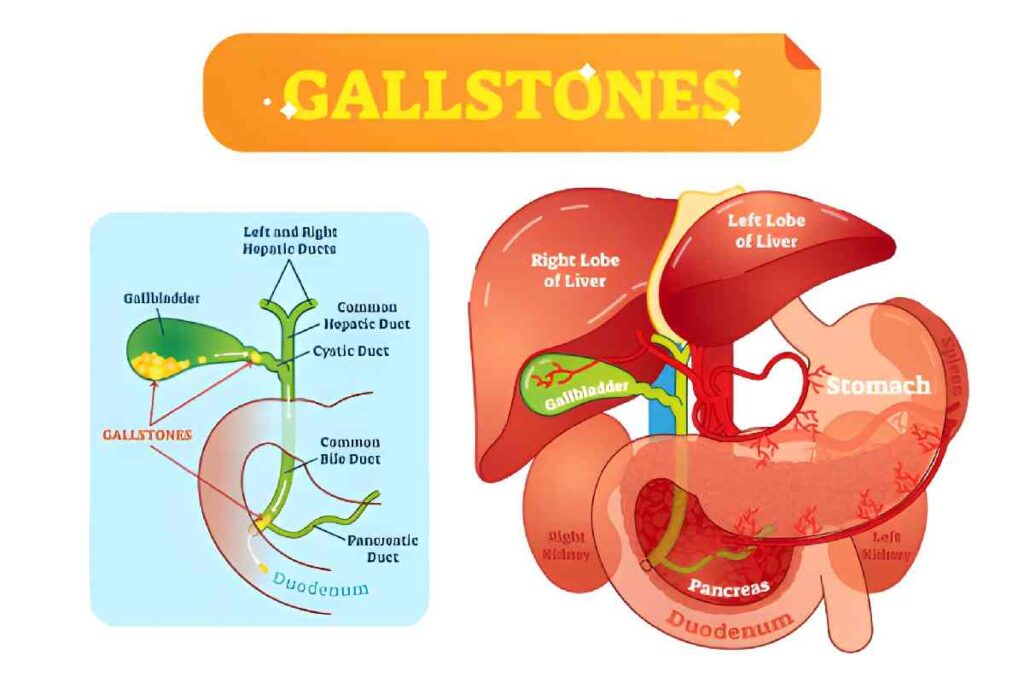
The imaging shows how big your stones are, how many, where they’re hanging out. That’s how doctors figure out if which size of gallbladder stone is dangerous applies to you specifically.
Don’t Live Scared
Yeah, gallstones can be serious. But most people with small quiet stones just live their lives normally. I know someone who’s had them for 15 years and never had a single symptom.
If you’re high-risk though—big stones, symptoms, whatever—dealing with it now beats waiting for an emergency later. Trust me on that one.
Listen to your body. If something feels off, get it looked at. Better to feel a little silly for overreacting than to end up in the ER at 3am like I did.
Understanding which size of gallbladder stone is dangerous means you can make smart choices instead of just worrying. And honestly? That’s half the battle right there.
Also Read : https://thenaturalbeautylife.com/mylicon-gas-drops/